Speed Limits in Germany: Is There Really No Limit on the Autobahn?
Is the German autobahn really limitless? On many stretches yes, with a 130 km/h advisory, but a growing share is capped and cities need an emissions sticker. Here is what a foreign driver should sort before the trip.
 Ramis Kalkan
Updated: 9 min read
In German towns the speed limit is 50 km/h, on open rural roads it’s 100 km/h, and on much of the autobahn there’s no general limit at all, only a recommended 130 km/h. That last part is why so many drivers want to try the autobahn, and it’s also where the confusion starts.
Here’s the catch most guides skip. “No limit” doesn’t mean everywhere. A large and growing share of the autobahn carries a binding limit, posted on signs or on overhead gantries that change with traffic and weather, and cameras enforce them. Get that wrong and the free stretch you pictured turns into a fine and points on your record.
This guide explains the speed limit in Germany by road type, what the 130 km/h advisory really means if you crash, the fines and alcohol rules if you’re caught, and the two things foreign drivers trip over most. Every figure below is tied to an official German source.
Key Takeaways
- German limits are 50 km/h in towns, 100 km/h on rural roads, and no general limit on much of the autobahn, with a 130 km/h advisory (StVO and the 1978 advisory-speed ordinance).
- “No limit” isn’t everywhere: roadworks, interchanges, and variable gantries set binding limits on a large share of the autobahn, and cameras enforce them.
- The 130 km/h Richtgeschwindigkeit is advice, not a fine, but driving faster can cut your compensation if another driver hits you.
- The blood alcohol limit is 0.5, and 0.0 for drivers in their first two years or under 21.
- Germany is toll-free for cars, but Austria, Switzerland, and Czechia aren’t, so sort a vignette before you cross.
Is There a Speed Limit on the German Autobahn?
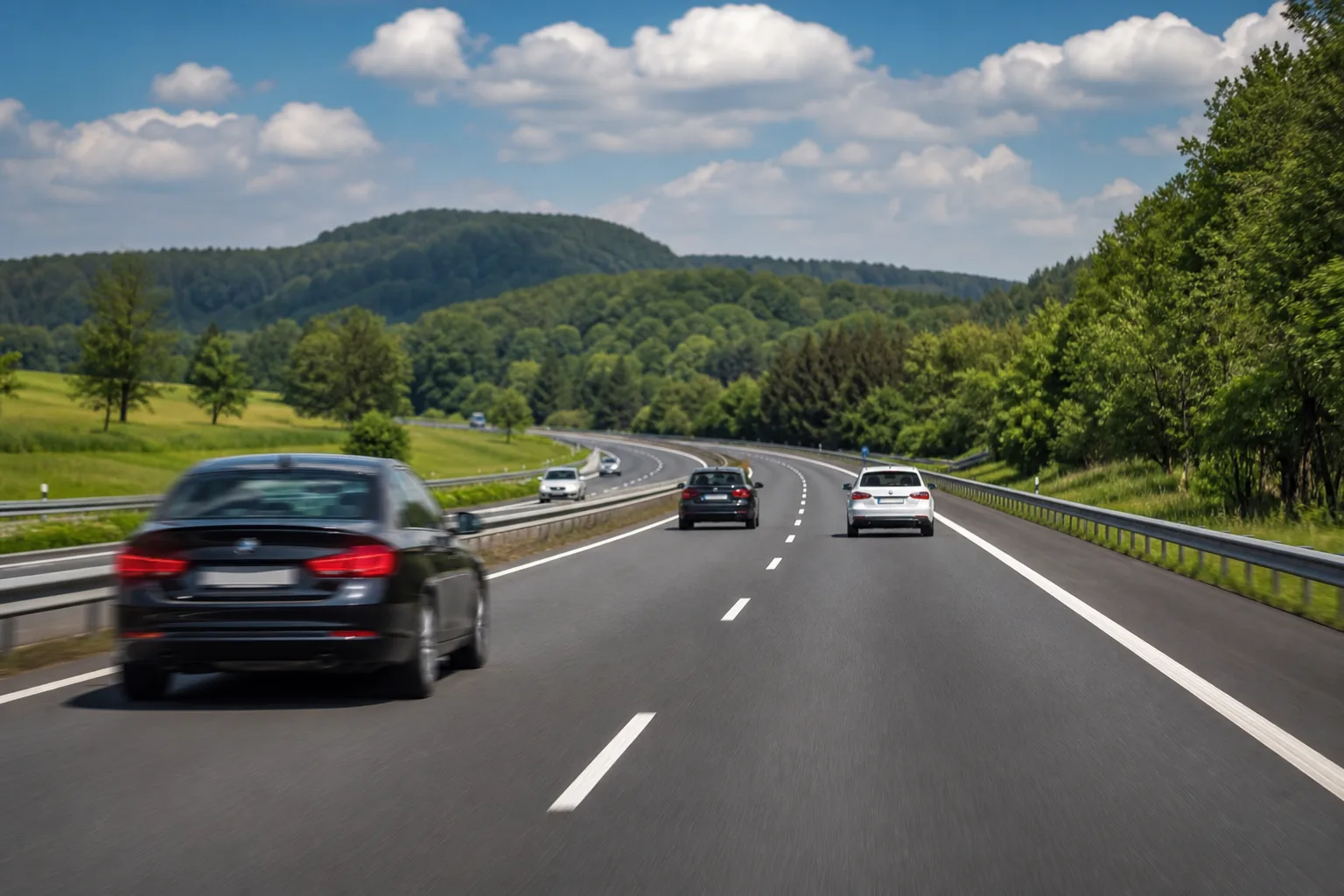
On many stretches of the German autobahn there’s no general speed limit, so you can legally drive as fast as conditions safely allow. The law sets a recommended speed of 130 km/h, the Richtgeschwindigkeit (advisory speed). It’s guidance, not a binding limit, so going faster on an open stretch isn’t by itself an offence.
That freedom is real, but it’s narrower than the reputation suggests. Whether a stretch is open depends entirely on the signs above and beside you, and they change often.
What the 130 km/h advisory really means
The 130 km/h Richtgeschwindigkeit comes from a 1978 federal ordinance, and it applies to autobahns and similar roads with two or more lanes in each direction. You won’t be fined for exceeding it on an unrestricted stretch, because the consequence is civil, not criminal.
Here’s the part most travel guides leave out. If you’re in a crash while driving above 130 km/h, a German court can reduce the compensation you receive, even when the other driver was mostly at fault. The reasoning is that higher speed adds to the inherent risk of your vehicle, so you carry a share of the responsibility. It’s worth remembering before you push past 130.
Where the autobahn does have a limit
Plenty of the autobahn isn’t open at all. You’ll meet a binding limit in several common places:
- Roadworks and lane closures
- Busy interchanges and slip roads
- Noise and air-quality sections near towns
- Digital gantries that lower the limit when traffic builds or the road is wet
These signs override the advisory speed, they’re legally binding, and cameras enforce them. So treat every open stretch as temporary and keep reading the signs, because the limit can drop from unlimited to 120, 100, or lower within a few hundred metres. Two signs tell you which mode you’re in:
- A round sign with a red border sets a binding limit.
- A grey sign with diagonal stripes cancels it and hands the advisory speed back to you.
German Speed Limits by Road Type
Away from the autobahn, Germany uses the same clear limits you’ll find across much of Europe. These come from Section 3 of the road traffic rules (Straßenverkehrs-Ordnung, or StVO) and apply to a standard car up to 3.5 tonnes.
| Road type | Speed limit for cars |
|---|---|
| Built-up area (town or village) | 50 km/h |
| Residential and Tempo-30 zones | 30 km/h |
| Rural road (Bundesstraße, outside towns) | 100 km/h |
| Autobahn and similar dual-carriageway roads | No general limit (130 km/h advisory) |
A few details catch people out:
- The 50 km/h town limit starts at the yellow place-name sign and ends at the same sign with a red line through it, so it can change the instant you pass a village boundary.
- Many city districts are signed as 30 km/h zones.
- If you tow a trailer or drive a vehicle over 3.5 tonnes, your autobahn limit is 80 km/h, advisory or not.
Speeding Fines, Points, and Alcohol Limits
Germany scales its speeding penalties by how far over the limit you are, and the same excess costs more in a town than on the open road. The penalties climb in broad steps:
- Minor overspeed: a fixed fine, no points.
- Larger overspeed: a bigger fine plus points on the driving-fitness register in Flensburg, held by the Federal Motor Transport Authority.
- Serious overspeed: a fine, points, and a one-month driving ban.
Because the fine catalogue is revised from time to time, check the current band rather than trusting an old figure. Foreign-registered drivers are traced across the EU, so a German ticket can still reach you at home.
The alcohol rules are stricter than many visitors expect. The general blood alcohol limit is 0.5, measured in grams per litre of blood.
For newer drivers the rule is absolute. Anyone in the two-year probationary period after passing the test, and every driver under 21, faces a 0.0 limit. That’s a full ban on drinking before driving, so treat it as zero if either applies to you.
What Foreign Drivers Get Wrong in Germany
The speed limits are the easy part. Two other rules quietly catch visitors out, and one of them can stop you at the edge of a city.
You still need an emissions sticker for the cities
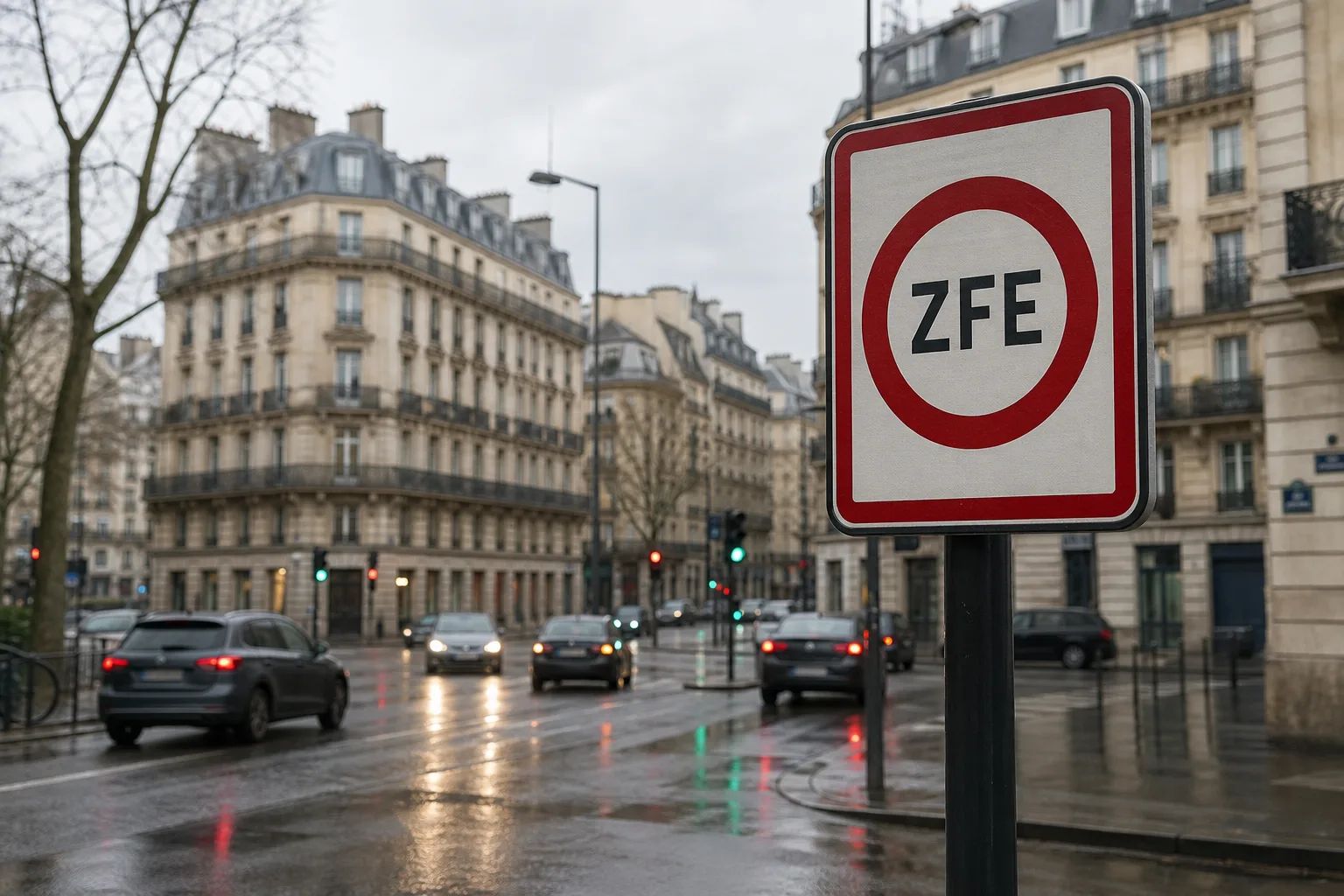
Most German city centres are low-emission zones (Umweltzonen), and to drive into one legally your car needs an emissions sticker on the windscreen, the Umweltplakette. There’s no booth at the zone boundary where you can buy one on the day, and the zone signs are easy to miss until you’re already inside. Order the sticker before your trip and fit it to the windscreen, and you can ignore the zones entirely. It’s a paper formality, not a toll, but driving into a zone without it is a fineable offence.
Lane discipline is taken seriously
Germany enforces lane discipline far more strictly than most countries. Three rules trip up visitors:
- No undertaking. You can’t pass a slower car on its right.
- Keep right. The left lane is for overtaking only, so move back over as soon as you’re past.
- No tailgating. Pushing up close to hurry a car along draws heavy fines and points.
On an open autobahn stretch, drifting in the left lane while faster traffic closes in is the classic foreign-driver mistake.
Germany is free, but its neighbours are not
Germany charges cars nothing to use its roads, which is exactly why a German road trip so often ends in a surprise at the border. Cross south into Austria and its motorways need a vignette, the Pickerl, before you join them. Our guide to speed limits in Austria covers the rules on the other side, and you can arrange the vignette for Austria before you leave home so the border isn’t a scramble.
The same applies west and east. Switzerland runs on an annual motorway sticker, so even a short hop needs the full-year Swiss vignette, and its limits differ too, as our Switzerland speed limits guide explains. Czechia works on the same vignette model, covered in our Czech speed limits guide. If you’re curious why Germany itself skips all of this, we explain it in why some countries have no vignette.
The Short Version
The speed limit in Germany is 50 km/h in towns, 100 km/h on rural roads, and unlimited on much of the autobahn, backed by a 130 km/h advisory that’s guidance rather than law. The freedom is genuine, but it isn’t everywhere, so keep reading the signs and gantries. Binding limits appear at roadworks, interchanges, and in bad weather.
Stay under 0.5 for alcohol, or 0.0 if you’re a new or under-21 driver, keep to the right unless overtaking, and fit an emissions sticker before you head into a city. Do that and Germany is one of the most relaxing places in Europe to drive. Just remember that the moment you cross into Austria, Switzerland, or Czechia, the free ride ends and a vignette begins, so sort that before you set off.
Frequently Asked Questions
Is there a speed limit on the German autobahn? On many stretches there’s no general limit, so you can drive as fast as is safe. The law recommends 130 km/h, but that’s advice, not a binding limit. Roadworks, interchanges, and variable gantries do set binding limits on large parts of the network, and those are enforced by camera.
What is the speed limit in German towns and on rural roads? In built-up areas the limit is 50 km/h, and it starts at the yellow place-name sign. On rural roads outside towns it’s 100 km/h for cars. Many residential districts are signed as 30 km/h zones.
Can tourists and foreign drivers use the autobahn? Yes. Any visitor with a valid licence can drive on the autobahn under the same rules as residents. The advice is to stay in the right lane unless overtaking, watch the overhead gantries closely, and never undertake.
Do I need an Umweltplakette to drive into German cities? Yes, most city centres are low-emission zones that require an emissions sticker on the windscreen. There’s no way to buy one at the zone edge, so order it before your trip. Entering a zone without a valid sticker is a fineable offence.
What happens if you get caught speeding in Germany? You get a fine that scales with how far over the limit you were, and it’s higher in towns than on the open road. Larger overspeeds add points to the register in Flensburg, and the worst cases bring a one-month driving ban. Foreign-registered drivers are traced across the EU.
Is it safe to drive with no speed limit? It can be, because open autobahn stretches are engineered for high speed and lane discipline is strict. The risk rises sharply in rain, heavy traffic, or when a slower car pulls out, which is why the 130 km/h advisory exists. Driving above it can also reduce your compensation if you’re involved in a crash.
Sources
Ramis Kalkan
Ramis Kalkan leads growth at Vignetim. He writes about everything that makes European road trips smoother, from digital vignettes to eSIMs. Based in Ankara, usually mid-way through planning his next drive.