Crit’Air Sticker: The Official Price and How to Order It
Resale sites charge 15 to 40 euros for a sticker the French state prices at 3.11 euros plus postage. Here is the official route, the ordering timeline, and what the 2026 court ruling means for low-emission zones.
 Ramis Kalkan
Updated: 9 min read
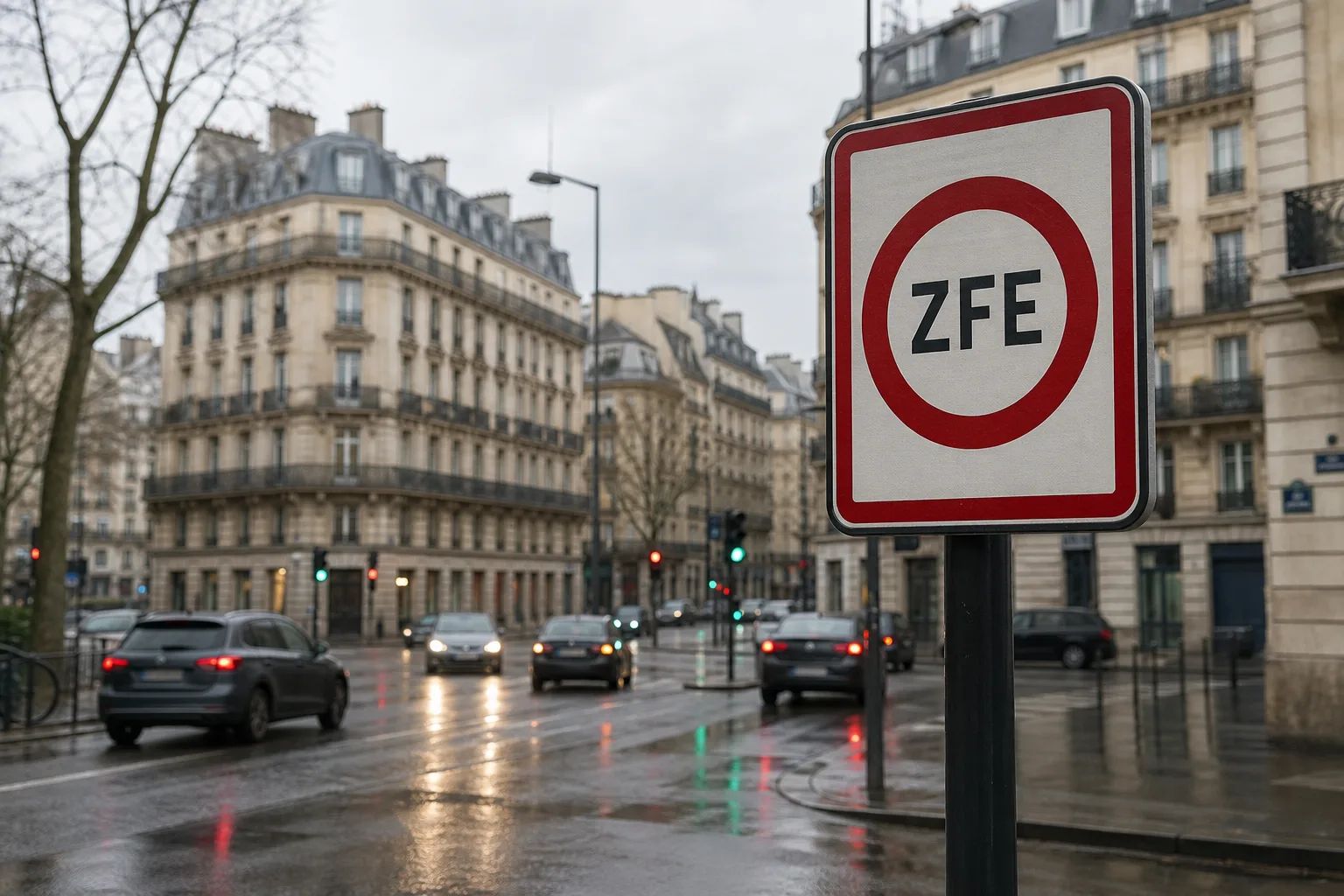
The Crit’Air sticker is the windscreen certificate that lets a car enter a French low-emission zone. The French state sets its price by decree at 3.11 euros plus the cost of postage, it is ordered from one government website, and it never expires. Resale sites routinely charge between 15 and 40 euros for the same piece of paper.
If you are reading this because you searched for the official Crit’Air website, that instinct is right and the answer is certificat-air.gouv.fr. The reason so many people search for it is that the scam industry around this sticker is unusually large. The government site announces itself as the official one in its own page title, which is not something a public service normally has to do.
Key Takeaways
- The statutory fee is 3.11 euros. Postage is added on top, so a sticker posted to the UK costs more than one posted within France. There is no single headline price, whatever the resale sites tell you.
- There is exactly one official ordering channel, and it is a government domain ending in gouv.fr.
- The sticker follows the vehicle for life. No renewal, no expiry.
- Order it weeks ahead. The physical sticker travels by post and can take considerably longer to reach a foreign address.
- Low-emission zones were not abolished in 2026. Parliament voted to remove them and the Conseil constitutionnel struck that vote down on 21 May 2026.
What the Sticker Actually Costs
Almost every guide quotes a single round number, and they disagree with each other, because they are all quoting a total rather than the rule.
The rule is in an arrêté. In the version in force since 1 March 2018, article 1 reads: “Le tarif de la redevance prévue à l’article R. 318-2 du code de la route est fixé à 3,11 euros, auxquels s’ajoute le montant de l’acheminement par voie postale.”
In plain English, the fee is 3.11 euros and postage is charged separately. That is why the totals differ. A sticker posted to a French address and one posted to a British address are the same certificate at the same statutory fee with different delivery costs bolted on.
The practical test is simple. If a site is charging you 15 euros or more, you are not paying the French state, you are paying a middleman who will order it for you.
Do You Actually Need One?
Only if you are entering a low-emission zone, which in French is a zone à faibles émissions. But that condition is easier to meet than most visitors expect, because the zones sit around the larger cities, including Paris and Lyon, and the list has grown steadily.
Three practical cases:
- Motorway transit, no city stop. If your route stays on the autoroute and never enters an urban zone, you may not need one at all.
- Any city stay. If a metropolitan area is on the itinerary, assume you need it.
- Unplanned detours. Diversions, hotel changes and satnav reroutes have a way of putting you inside a boundary you never intended to cross. The sticker costs a few euros. The fine does not.
Because the zone list changes as more cities join and rules tighten, check the current map on the official portal at mieuxrespirerenville.gouv.fr before you travel rather than trusting any list, including this one.
The 2026 ruling that confused everyone
In 2026 the French Parliament voted to delete the legal provisions that create low-emission zones, and a wave of coverage announced that the zones were finished.
They are not. On 21 May 2026 the Conseil constitutionnel struck the provision down in decision 2026-903 DC. The reasoning was procedural: the article had been attached to a business simplification bill it had no real connection to, which makes it what French constitutional law calls a cavalier législatif. The Council expressly did not rule on whether low-emission zones are good policy.
Two consequences follow. The zones and the sticker requirement remain fully in force today. And because the censure was about how the repeal was passed rather than about what it said, the question can come back in a properly drafted bill, so this is worth re-checking before a future trip rather than filing away as settled.
The Six Classes, and Why We Are Not Printing a Table
Crit’Air sorts vehicles into six categories: E for electric and hydrogen, then classes 1 through 5 in descending order of cleanliness. Your class is decided by the vehicle type, the fuel and the Euro emission standard the vehicle meets, which in practice tracks its first registration date.
Two things are reliable enough to state plainly. Electric and hydrogen vehicles get the green E sticker. And a diesel always rates worse than a petrol car of the same age, which is the single most common surprise for drivers who assumed a newer diesel would be treated well.
Beyond that, we are deliberately not publishing a class-by-class table. The mapping between Euro standards, fuel types and registration dates has enough edge cases that a table copied into a blog post ages badly and misleads people, and a wrong class here means a fine rather than an inconvenience. The ordering form itself classifies your vehicle from its registration document, which is both authoritative and free to check.
How to Order It
The process is short. The waiting is not.
- Go to certificat-air.gouv.fr and check the domain ends in gouv.fr before you type anything.
- Enter the vehicle details from the registration document. For a foreign vehicle this means the registration certificate, so have the V5C or equivalent in front of you.
- Pay the statutory fee plus postage.
- Wait for the sticker to arrive by post, then fix it inside the windscreen where it can be read from outside.
The timing is the part people underestimate. The certificate is issued quickly, but the physical sticker is printed and posted from France, and a foreign address adds international post to that. Treat several weeks as the planning assumption rather than a worst case. If your trip is next week, this is the item to deal with today.
How to Recognise a Resale Site
The scam sites are competent. They rank well, they look institutional, and several use the words “official” or “certificate” in a domain that has nothing to do with the French state. What they do is take your money, order the sticker at 3.11 euros plus postage on your behalf, and keep the difference.
The tells:
- The domain. The only official channel sits on a gouv.fr domain. Anything else is a reseller, however governmental the design looks.
- The price. A total in the teens or higher is a middleman fee. The statutory fee is 3.11 euros plus postage.
- Urgency language. “Express”, “priority processing” and “instant delivery” describe a service the French state doesn’t sell. Nobody can make the post go faster.
- Bundles. Anything sold alongside a set of unrelated European stickers is a retail product, not a government certificate.
To be explicit about our own position: Vignetim does not sell the Crit’Air sticker and is not an official or authorised channel for it. We sell vignettes for countries that use them, which France does not. This guide exists to get you to the government site with the right expectations, not to sell you anything.
Where This Fits in a French Trip
The sticker is one item on a longer list. Our guide to driving in France covers the documents and equipment you need in the car, including the breathalyser requirement that was abolished in 2020 and still appears on most packing lists, and the speed limits that quietly drop when it rains.
France charges for its motorways by distance rather than by a sticker, so the Crit’Air certificate is not a toll product and buying one does not pay for any road use. If your route carries on into Switzerland, Austria or Slovenia, those countries do sell time-based vignettes and they are checked at the border. The Swiss vignette is the one most French trips run into, and our vignette and toll hub covers which of your transit countries charge by time and which by distance.
The Short Version
The sticker costs 3.11 euros plus postage, ordered from certificat-air.gouv.fr and nowhere else. It lasts as long as the vehicle and never needs renewing. You need it for any French city with a low-emission zone, those zones survived the 2026 repeal attempt after the Conseil constitutionnel struck it down in May, and the only real difficulty is that the sticker arrives by post. Order it early, check the domain, and ignore anyone charging 15 euros or more.
Frequently Asked Questions
How much does a Crit’Air sticker cost?
The statutory fee is 3.11 euros, set by arrêté, with postage added on top. Because postage depends on the destination, a sticker sent abroad costs more in total than one sent within France. Sites charging 15 to 40 euros are resellers.
What is the official Crit’Air website?
certificat-air.gouv.fr, operated for the French Ministry for Ecological Transition. It is the only channel that issues the certificate. Any site on a different domain is a middleman.
Do I need a Crit’Air sticker for France?
You need one to enter a low-emission zone, which covers most large French cities including Paris and Lyon. If your route only uses motorways and never enters an urban zone you may not need one, but a detour into a zone without a sticker risks a fine.
Were low-emission zones abolished in France in 2026?
No. Parliament voted to abolish them, but the Conseil constitutionnel struck that article down on 21 May 2026 in decision 2026-903 DC, on the ground that it was a legislative rider unrelated to the bill carrying it. The zones and the sticker requirement remain in force.
How long does a Crit’Air sticker take to arrive?
The certificate is issued quickly but the physical sticker is posted from France, and international delivery adds to that. Plan on several weeks rather than days, especially for an address outside France.
Does the Crit’Air sticker expire?
No. The classification stays with the vehicle for its whole life and the sticker remains valid as long as it is still legible. There is no renewal.
Can I buy a Crit’Air sticker when I arrive in France?
No. There is no over-the-counter option at the border or at motorway services. It is ordered online from the government and delivered by post, which is why it has to be arranged before the trip.
Do foreign-registered cars need a Crit’Air sticker?
Yes. The zones apply to the vehicle regardless of where it is registered, and the ordering system accepts foreign registration documents.
Is a diesel car always a worse Crit’Air class than petrol?
For the same age, yes. Diesels are classified less favourably than equivalent petrol vehicles, which catches out drivers who assume a recent diesel will be treated generously.
Sources
- Arrêté du 29 juin 2016 fixant le tarif de la redevance pour la délivrance du certificat qualité de l’air, article 1, version in force since 1 March 2018
- Certificat qualité de l’air, official ordering site
- Ministère de la Transition écologique: Crit’Air certificates
- Conseil constitutionnel, décision n° 2026-903 DC of 21 May 2026
- Mieux respirer en ville: official low-emission zone portal
Ramis Kalkan
Ramis Kalkan leads growth at Vignetim. He writes about everything that makes European road trips smoother, from digital vignettes to eSIMs. Based in Ankara, usually mid-way through planning his next drive.