V16 Beacon Spain: Do You Need One in a Foreign Car?
Spain’s V16 beacon rule has been widely reported and widely misreported. Whether it binds your car depends on one thing, and it is not where you are driving.
 Ramis Kalkan
Updated: 8 min read
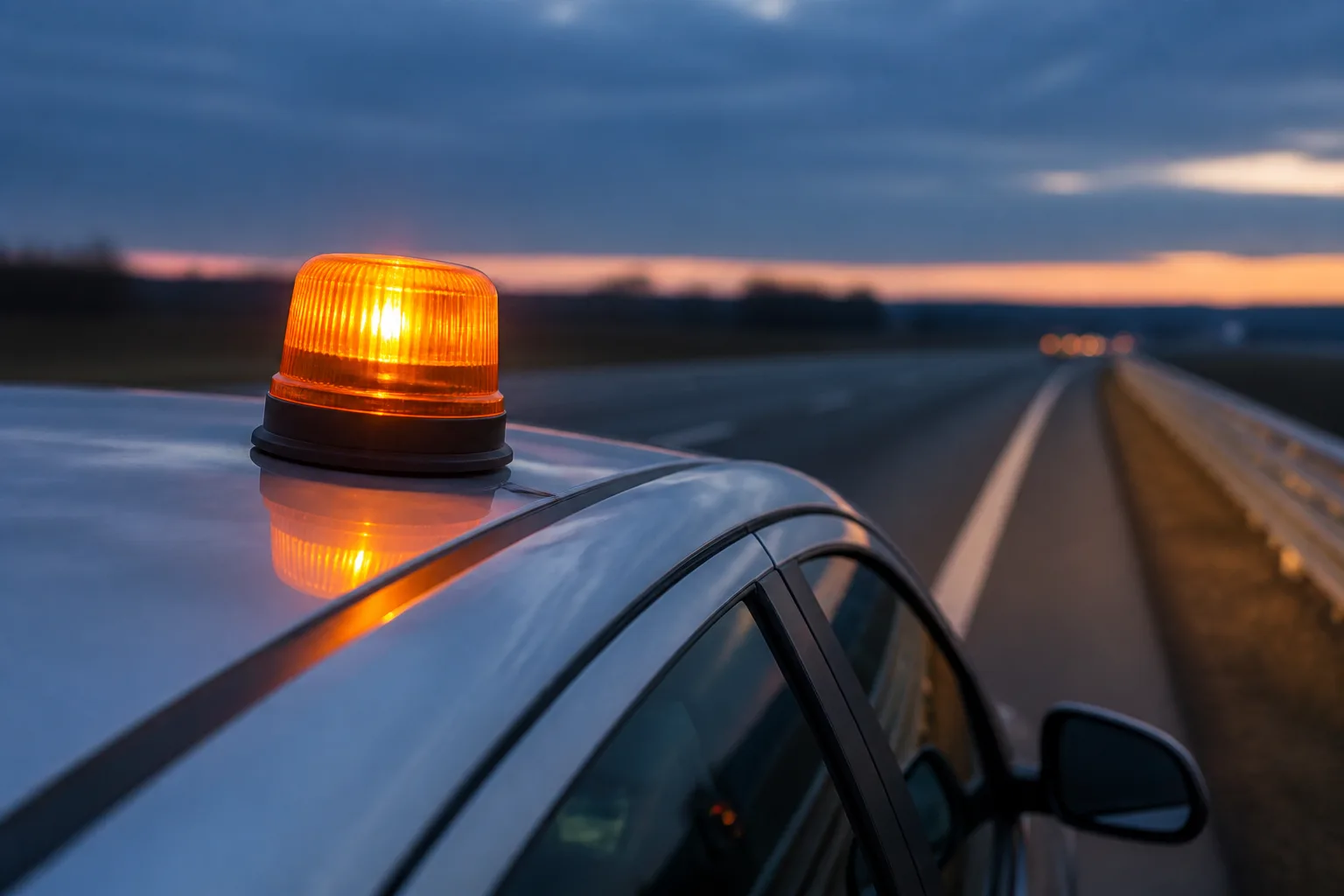
On 1 January 2026 Spain retired the warning triangle. In its place came the connected V16 beacon. It is a flashing amber light that sits on the car roof. It also reports the vehicle’s position to the national traffic network so that approaching drivers are warned before they can see anything.
It was a genuine road safety reform. It targeted a specific and grim problem, and it’s worth knowing why. People were being struck while walking along a hard shoulder to place a triangle behind their broken-down car.
It has also produced a remarkable amount of confusion, including a good deal of confidently wrong advice aimed at visitors. This guide answers the question most people are actually asking. Does the rule bind a foreign car? It then deals with the mess around beacons whose approval has been withdrawn.
The short version
- Since 1 January 2026 the connected V16 is the only valid way to signal a stopped vehicle for cars that Spanish law binds.
- Your equipment obligation follows the country your car is registered in. A foreign-plated car carries what its own law requires, normally triangles.
- The fine, where the rule applies, is 80 euros, a minor offence.
- Approval being withdrawn from a beacon model stops it being sold. It does not make a beacon you already own illegal to use.
What the Rule Actually Says
Spain’s traffic authority is unambiguous about the date and the exclusivity. The connected V16 is, in its words, the only legal pre-signalling device from 1 January 2026.
A compliant beacon has to do two things. It emits a 360 degree high-intensity flashing light for at least thirty minutes, and it connects to the authority’s own platform to transmit its location while it is switched on. That connectivity is what makes it “connected” rather than just a lamp. It is also why older non-connected V16 lights, which were legal for several years as an alternative to triangles, stopped being sufficient.
The beacon transmits only when activated, and only for road safety purposes. It is not a tracker.
Failing to carry one, where the obligation applies, is a minor offence carrying an 80 euro fine.
Does It Apply to a Foreign Car?
No, and the reasoning is worth understanding rather than just taking on trust, because you will find plenty of pages telling you the opposite.
Vehicle equipment requirements are not set by the country you happen to be driving through. They are set by the country your vehicle is registered in. This isn’t a Spanish concession or a loophole. It’s the ordinary international rule. The Spanish traffic authority itself points to the source: the Vienna Convention on Road Traffic.
The Convention requires a stopped vehicle to be signalled by one of two things. Either a plate in the shape of an equilateral triangle, or, in the Convention’s own words, any other device of equal effect prescribed by the legislation of the country in which the vehicle is registered.
That second limb is the whole answer. If your car is registered in the UK, France, Germany, Ireland or anywhere else, the device you must carry is the one your own country prescribes. For most of Europe that remains the warning triangle. Spain cannot require a car registered abroad to carry a Spanish-specification device.
The principle runs both ways, which is how you can tell it is a real rule rather than special pleading. Spain’s own authority says the same in reverse. A Spanish-registered car may use its V16 in other Vienna Convention countries, including Portugal, France, Germany, Italy and the United Kingdom, precisely because the car carries what Spain prescribes.
Should you buy one anyway?
Carrying a V16 is never wrong, and there are two decent reasons a visitor might choose to.
The first is practical rather than legal. The beacon exists because standing on a hard shoulder is dangerous, and that danger does not check your number plate. Placing a beacon on the roof from inside the car is genuinely safer than walking fifty metres back along a live carriageway with a triangle.
The second is that it removes an argument. The rule is new, it has been widely misreported, and not every person you might have to explain it to will have read the Vienna Convention. A beacon costs less than the fine.
What you should not do is buy one because a website told you it is compulsory for tourists. That claim is wrong, and it is usually being made by somebody selling beacons.
The Withdrawn Models Problem
This is the part that has generated the most alarm, and the alarm is mostly misplaced.
Since the mandate began, the traffic authority has withdrawn its approval from a number of specific V16 models, in more than one batch. Understandably, people who own one of them have wondered whether they are now driving around with an illegal device.
The important distinction is between selling and using.
The reasons for the withdrawals also matter to how worried you should be. The cases reported so far were administrative rather than technical. Some manufacturers did not renew their certification, or that stopped producing the device and withdrew support for it. That is a paperwork failure at the manufacturer, not a finding that the light does not work.
If you own a beacon and want certainty about your specific model, the only source worth using is the traffic authority’s own list of approved devices. Retailer claims and news articles, including the model names circulating in the press, go out of date quickly and are not the authority.
How to Tell If a Beacon Is Compliant
If you are buying one, whether because your car is Spanish registered or simply because you want it, the checks are short.
- It must be connected, not merely a V16-branded flashing light. Non-connected models were legal before 2026 and are not sufficient now.
- It must be on the official approved list. Check the traffic authority’s list rather than the seller’s description.
- Connectivity should be included for the device’s stated life rather than sold as a subscription that lapses.
- It goes on the roof, magnetically, placed from inside the vehicle or from the doorway. If you are getting out and walking with it, it is not doing the job it exists for.
What This Means for Your Trip
Visiting Spain in a car registered somewhere else? The practical answer is short. Carry the breakdown equipment your own country requires, keep your reflective jacket inside the cabin rather than the boot, and drive on.
If you keep a car in Spain, get an approved connected beacon and check it against the official list rather than the packaging.
A visiting driver needs a few more things. Those include the tolls that no longer exist on much of the motorway network, and the overtaking rule that was abolished in 2022, is in our guide to driving in Spain. If Spain is one leg of a longer European drive, the pre-trip document checklist is in driving in Europe requirements.
Frequently Asked Questions
Do I need a V16 beacon in Spain with a UK car?
No. Your equipment obligation follows the country your vehicle is registered in, so a UK-registered car carries what UK law requires, which is a warning triangle. The Spanish device rule binds vehicles that Spanish law binds.
When did the V16 become mandatory in Spain?
1 January 2026. From that date the connected V16 is the only valid pre-signalling device for vehicles the rule covers, and warning triangles stopped being sufficient for them.
What is the fine for not having a V16?
80 euros, treated as a minor offence, for vehicles the obligation applies to.
My V16 model had its approval withdrawn. Is it now illegal?
No. Withdrawal of approval stops a model being sold in Spain. A beacon somebody already owns can still be used. The withdrawals reported so far have been administrative, such as a manufacturer not renewing certification or discontinuing the product, rather than a fault with the device.
Does the V16 beacon track my car?
No. It transmits its location only while it is switched on, and only for road safety purposes, so that approaching traffic and the road network are warned about a stopped vehicle.
Can I use a Spanish V16 in other countries?
Spain’s traffic authority confirms the reverse case too. A Spanish-registered vehicle may use its V16 in countries party to the Vienna Convention, including Portugal, France, Germany, Italy and the UK, because the vehicle carries the device its country of registration prescribes.
Do I still need warning triangles in Spain?
If your car is registered outside Spain, yes, carry whatever your own country requires, which is normally triangles. If your car is Spanish registered, triangles no longer discharge the obligation and you need an approved connected V16.
Are non-connected V16 lights still valid?
Not for vehicles the Spanish rule covers. Non-connected V16 lamps were a legal alternative to triangles for several years, but from 1 January 2026 the device must connect to the traffic authority’s platform.
The Short Version
The V16 is a sensible safety rule that has been reported as though it were a tourist tax. Two things settle almost every version of the question:
- Where your car is registered decides what you must carry. Foreign plate, foreign rules, triangles are fine.
- Withdrawal of approval affects sale, not use. If you already own the beacon, keep using it, and check the official list if you want certainty.
More country guides are in our driving guides collection, and the Spanish toll picture is on our Spain tolls page.
Sources
Ramis Kalkan
Ramis Kalkan leads growth at Vignetim. He writes about everything that makes European road trips smoother, from digital vignettes to eSIMs. Based in Ankara, usually mid-way through planning his next drive.