Speed Limits in Poland: Fast Roads, Near-Zero Alcohol
Poland’s motorways run at 140 km/h, among the fastest in Europe, but the alcohol limit is a near-zero 0.2. Here are the speed limits by road type, plus which roads actually toll a car.
 Ramis Kalkan
Updated: 6 min read
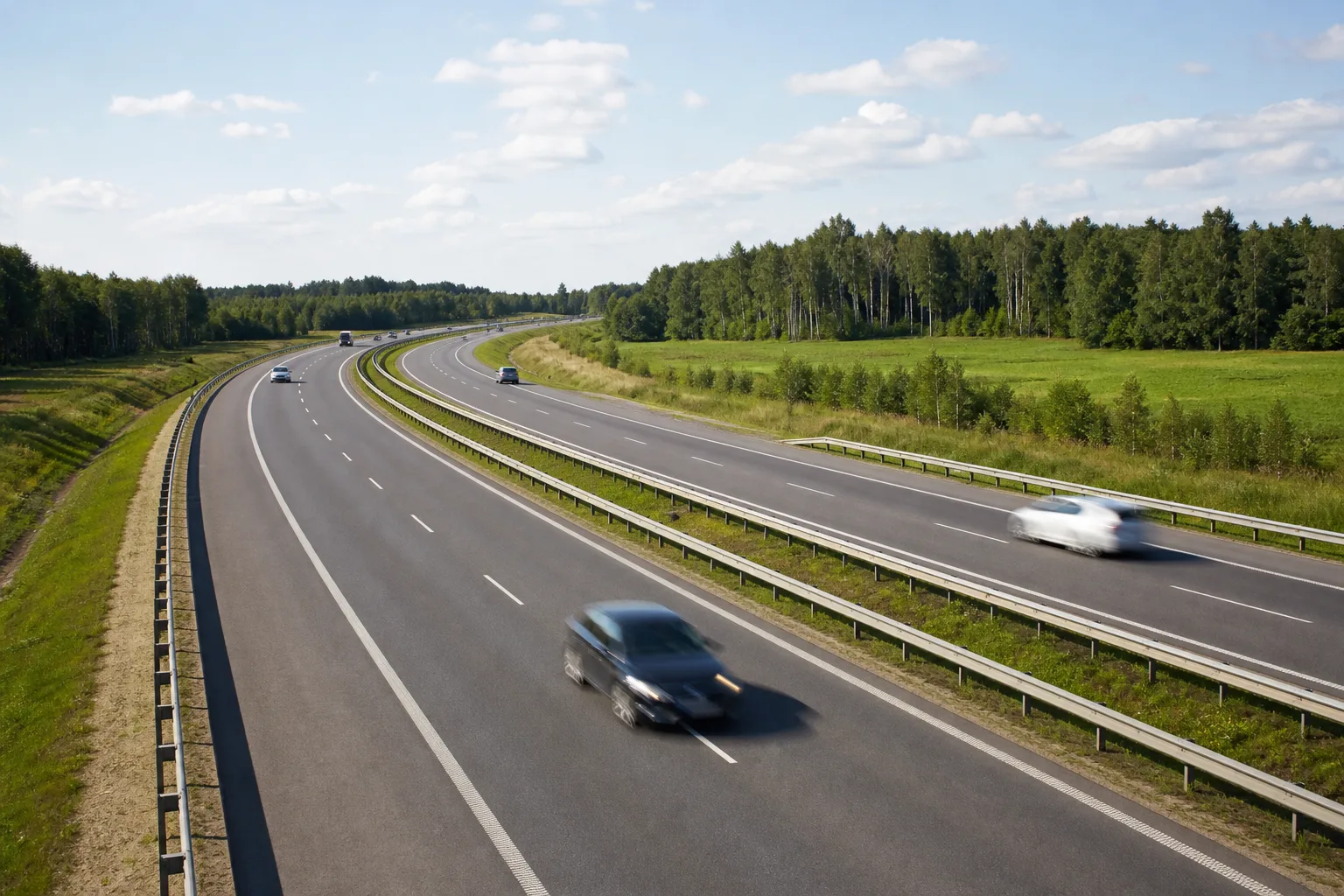
In Poland the motorway (autostrada) speed limit is 140 km/h, the joint-highest in the EU. Expressways are 120, rural roads 90, and towns 50. But the figure that catches foreign drivers out isn’t the speed at all: it’s the alcohol limit, a near-zero 0.2 g/L that’s far stricter than most of Europe.
That pairing is the thing to remember. Poland lets you drive faster than almost anywhere else, then holds you to an alcohol limit so low that a single drink can put you over it. Get both figures right and the rest is straightforward.
This guide covers the speed limit in Poland by road type, the strict alcohol rule, the tougher fines since the 2022 reform, and which roads actually toll a car. Every figure is tied to an official Polish or EU source.
Key Takeaways
- Polish limits are 140 km/h on the motorway, 120 on expressways, 90 on rural roads, and 50 in towns.
- The 140 km/h motorway limit is the joint-highest in the EU, matched only by Bulgaria.
- The blood alcohol limit is 0.2 g/L for every driver, far stricter than the 0.5 common elsewhere.
- Since the 2022 reform, Polish speeding fines are much higher, with immediate licence suspension for extreme urban speeding.
- Poland charges tolls, not a vignette. Most motorways are free for cars, and e-TOLL is mainly for lorries.
What Are the Speed Limits in Poland?
Poland sets its limits by road type, and the motorway figure is the standout. These come from the Polish highway rules and apply to a standard car up to 3.5 tonnes.
| Road type | Speed limit for cars |
|---|---|
| Motorway (autostrada, A) | 140 km/h |
| Expressway (droga ekspresowa, S), dual carriageway | 120 km/h |
| Expressway single carriageway / dual road, two lanes each way | 100 km/h |
| Rural single-carriageway road | 90 km/h |
| Built-up area (obszar zabudowany) | 50 km/h |
One recent change is worth noting: the built-up-area limit is now 50 km/h day and night. The old rule that allowed 60 km/h in towns after 11pm has been removed, so it’s 50 around the clock.
The 140 Limit and the 0.2 Alcohol Rule
Poland’s two headline figures pull in opposite directions, and foreign drivers get caught by the gap between them.
The motorway limit of 140 km/h is the joint-fastest in the EU, matched only by Bulgaria. It applies on the autostrada (the A roads); expressways, the S roads, are 120. If you’re used to a 120 or 130 motorway limit at home, Poland feels quick, but the limit is real and enforced.
The alcohol limit runs the other way. At 0.2 g/L for every driver, it’s one of the strictest in Europe, well below the 0.5 most countries use. In practice that means no drinking at all before you drive, because even a small amount can put you over. There’s no separate, more relaxed limit for experienced drivers.
Speeding Fines Since the 2022 Reform
Poland overhauled its penalties in 2022, and fines are now much higher than the figures older guides quote. The penalties scale with how far over the limit you are, and repeat offences within a period cost more:
- Moderate overspeed: a fine and penalty points.
- Larger overspeed: a steeper fine and more points.
- Over 50 km/h above the limit in a town: an immediate three-month licence suspension.
Enforcement is camera-heavy, and Polish fines reach foreign drivers across the EU through cross-border enforcement. Because the 2022 reform reset the amounts, check the current figure rather than an older guide, and remember that headlights are required day and night, year-round.
Which Polish Roads Actually Toll a Car?
Poland is a toll country, but the picture for cars changed recently and confuses a lot of visitors. Here’s what actually applies to a car today:
- Most state motorways: free for cars since 2023.
- A few concession sections (parts of the A1, A2, and A4): still tolled, paid on the stretch itself.
- e-TOLL: the national electronic system, mainly for heavy vehicles over 3.5 tonnes.
None of this is a vignette, and there’s no sticker to buy before the border. So for most car trips you’ll pay nothing at all.
Poland Charges Tolls, Not a Vignette
Poland has no motorway vignette, so there’s nothing to buy in advance for the border. Where a vignette does come in is the neighbours. Poland sits at the top of the Central European corridor, and the countries around it work differently.
Drive south into Czechia and you need a Czech vignette before you join the motorway, with the rules in our Czech speed limits guide. Slovakia works on the same sticker model, covered in our Slovakia speed limits guide. Heading west into Germany, which is toll-free for cars, our Germany speed limits guide explains the autobahn rules on that side.
The Short Version
The speed limit in Poland is 140 km/h on the motorway, 120 on expressways, 90 on rural roads, and 50 in towns, day and night. The motorway figure is the joint-highest in the EU, so the roads feel fast, but the 0.2 g/L alcohol limit means no drinking before you drive.
Fines have been much higher since the 2022 reform, and extreme urban speeding brings an on-the-spot licence suspension. Most Polish motorways are free for cars now, with tolls only on a few concession sections, and none of it is a vignette. Cross into Czechia or Slovakia, though, and you’ll need their sticker at the border.
Frequently Asked Questions
What is the speed limit on Polish motorways? The motorway (autostrada) limit is 140 km/h, the joint-highest in the EU. Expressways (the S roads) are 120 km/h. Both are enforced by camera and by cross-border fines for foreign drivers.
Why is Poland’s motorway limit so high? Poland sets its motorway limit at 140 km/h, matched in the EU only by Bulgaria. It reflects the country’s newer, high-standard motorway network. The limit is real and enforced, not an advisory.
What is the drink-drive limit in Poland? Poland’s blood alcohol limit is 0.2 g/L for every driver, one of the strictest in Europe. It’s well below the 0.5 most countries use, so the safe approach is no alcohol at all before driving.
Do I have to pay tolls to drive in Poland? For most car trips, no. Since 2023 state-managed motorways are free for cars, and tolls remain only on a few privately-run concession sections of the A1, A2, and A4. The e-TOLL system is mainly for heavy vehicles.
Are Polish speeding fines higher than before? Yes. A 2022 reform raised fines sharply, so older guides understate them. Extreme urban speeding, more than 50 km/h over the limit in a town, brings an immediate three-month licence suspension.
Do Polish fines reach foreign drivers? Yes. Enforcement is camera-heavy, and fines reach vehicle keepers across the EU under the cross-border enforcement directive. A foreign registration does not prevent the fine.
Sources
Ramis Kalkan
Ramis Kalkan leads growth at Vignetim. He writes about everything that makes European road trips smoother, from digital vignettes to eSIMs. Based in Ankara, usually mid-way through planning his next drive.