Speed Limits in Croatia: Motorways, Tolls, and the Euro
Croatia’s motorways run at 130 km/h, and since it joined the euro in 2023 the fines and tolls are in EUR, not kuna. Here are the speed limits by road type for the drive to the coast.
 Ramis Kalkan
Updated: 5 min read
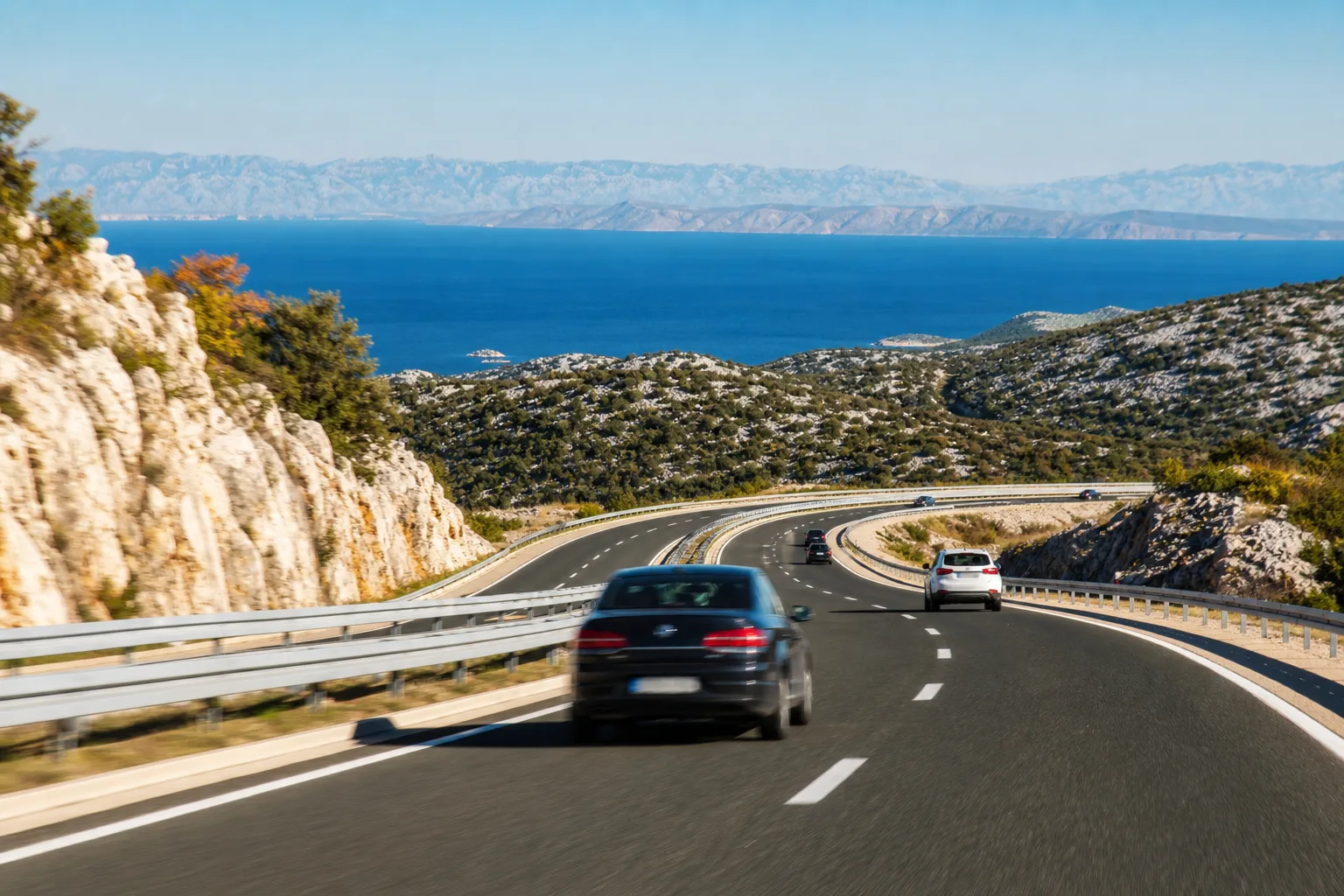
In Croatia the motorway (autocesta) speed limit is 130 km/h, expressways are 110, rural roads 90, and towns 50. The speeds are simple, and the roads to the coast are excellent. The change worth knowing is that Croatia joined the euro in 2023, so fines and tolls are now in euro, not the old kuna.
Here’s why that matters. Plenty of guides still quote kuna figures, and the tolls to the Adriatic coast are paid at booths, so you want the right currency and the right method in mind before you set off. Get the limits and the tolls lined up and Croatia is one of Europe’s great summer drives.
This guide covers the speed limit in Croatia by road type, the fines and alcohol limits, and how the motorway tolls work. Every figure is tied to an official Croatian or EU source.
Key Takeaways
- Croatian limits are 130 km/h on the autocesta, 110 on expressways, 90 on rural roads, and 50 in towns.
- Croatia uses the euro since 2023, so fines and tolls are in EUR, not kuna.
- The blood alcohol limit is 0.5, but 0.0 for drivers under 24 and for professional drivers.
- Pay a minor on-the-spot fine within three days and you pay half the minimum.
- Croatia charges motorway tolls (cestarina), not a vignette.
What Are the Speed Limits in Croatia?
Croatia sets its limits by road type, in the standard pattern. These come from the Croatian road-safety law and apply to a standard car.
| Road type | Speed limit for cars |
|---|---|
| Motorway (autocesta) | 130 km/h |
| Expressway (brza cesta) | 110 km/h |
| Road outside built-up areas | 90 km/h |
| Built-up (urban) area | 50 km/h |
A built-up-area limit can be signed up to 80 km/h on some through-roads, and lower signed limits are common on the coastal and island roads, where bends bring the figure down. Follow the sign, which always overrides the default.
Speeding Fines and the Alcohol Limit
Croatia enforces speeding heavily, especially on the busy summer routes to the coast, and since 2023 the fines are set in euro. The amount scales with how far over the limit you are, and the highest bands are large, so a serious overspeed is expensive.
One rule is worth knowing and saves money:
- Pay a minor fine fast. For smaller penalties, paying on the spot or within three days of the notice means you pay half the minimum amount.
The alcohol rules are strict, and stricter for some drivers:
- General limit: 0.5 grams per kilogram of blood.
- Drivers under 24, professional drivers, and instructors: 0.0, a full ban on any alcohol.
Treat the zero group as no alcohol at all, and note that young drivers also face tougher penalty-point rules.
How Croatian Tolls Work
Croatia’s motorways are tolled, but there’s no vignette. On most of the network you take a ticket as you join and pay at a booth when you leave, by cash or card, with the amount set by distance and vehicle. Keep the entry ticket safe, because losing it can mean paying the toll for the longest possible route.
One change is on the way. Croatia is moving toward a barrier-free, free-flow toll system, so over time the booths will disappear and cameras will read your plate instead. The exact switch-over date isn’t fixed yet, so for now expect the ticket-and-booth method on the A1 to the coast. None of it is a vignette, a difference we explain in the wider European vignette guide.
Getting to the Croatian Coast
Most drivers reach Croatia overland from the north, and the last country before the border usually does use a vignette, which Croatia doesn’t. Coming through Slovenia, you need a Slovenian vignette before you join its motorways, and our Slovenia speed limits guide covers that leg. Arriving via Hungary instead, our Hungary speed limits guide explains its e-matrica and rules. Sort the transit country’s sticker before its border, then enjoy Croatia’s toll-booth motorways to the coast.
The Short Version
The speed limit in Croatia is 130 km/h on the autocesta, 110 on expressways, 90 on rural roads, and 50 in towns. Since Croatia joined the euro in 2023, fines and tolls are in euro, so ignore any old kuna figures. If you pick up a minor fine, paying within three days halves the minimum.
Keep under 0.5 for alcohol, or 0.0 if you’re under 24 or driving professionally, and keep your motorway toll ticket safe until you pay at the exit. Croatia charges tolls rather than a vignette, but the country you cross to reach it, Slovenia or Hungary, needs a sticker at its border.
Frequently Asked Questions
What is the speed limit on Croatian motorways? The motorway (autocesta) limit in Croatia is 130 km/h, and expressways (brza cesta) are 110 km/h. Rural roads are 90 and towns are 50. Lower signed limits are common on the coastal and island roads.
Are Croatian fines in euro or kuna? In euro. Croatia adopted the euro in 2023, so all fines and tolls are now set in EUR. Older guides that quote kuna are out of date.
What is the drink-drive limit in Croatia? The general blood alcohol limit is 0.5. For drivers under 24, professional drivers, and driving instructors, it is 0.0, meaning no alcohol at all. Young drivers also face stricter penalty points.
Do you need a vignette to drive in Croatia? No. Croatia has no vignette. Its motorways are tolled (cestarina): you take a ticket on entry and pay at a booth on exit, by cash or card. A free-flow, barrier-free system is being introduced over time.
Can you pay a Croatian traffic fine at a discount? Yes. For a minor fine, paying on the spot or within three days of the notice means you pay half the prescribed minimum. It’s the single most useful tip for a foreign driver who gets stopped.
Sources
Ramis Kalkan
Ramis Kalkan leads growth at Vignetim. He writes about everything that makes European road trips smoother, from digital vignettes to eSIMs. Based in Ankara, usually mid-way through planning his next drive.