ETIAS for Drivers: What Actually Changes at Europe’s Road Borders
Europe’s new €20 travel authorisation arrives in late 2026, and it applies at motorway borders just like airports. What ETIAS means for a road trip, without the scare stories.
 Ramis Kalkan
Updated: 6 min read
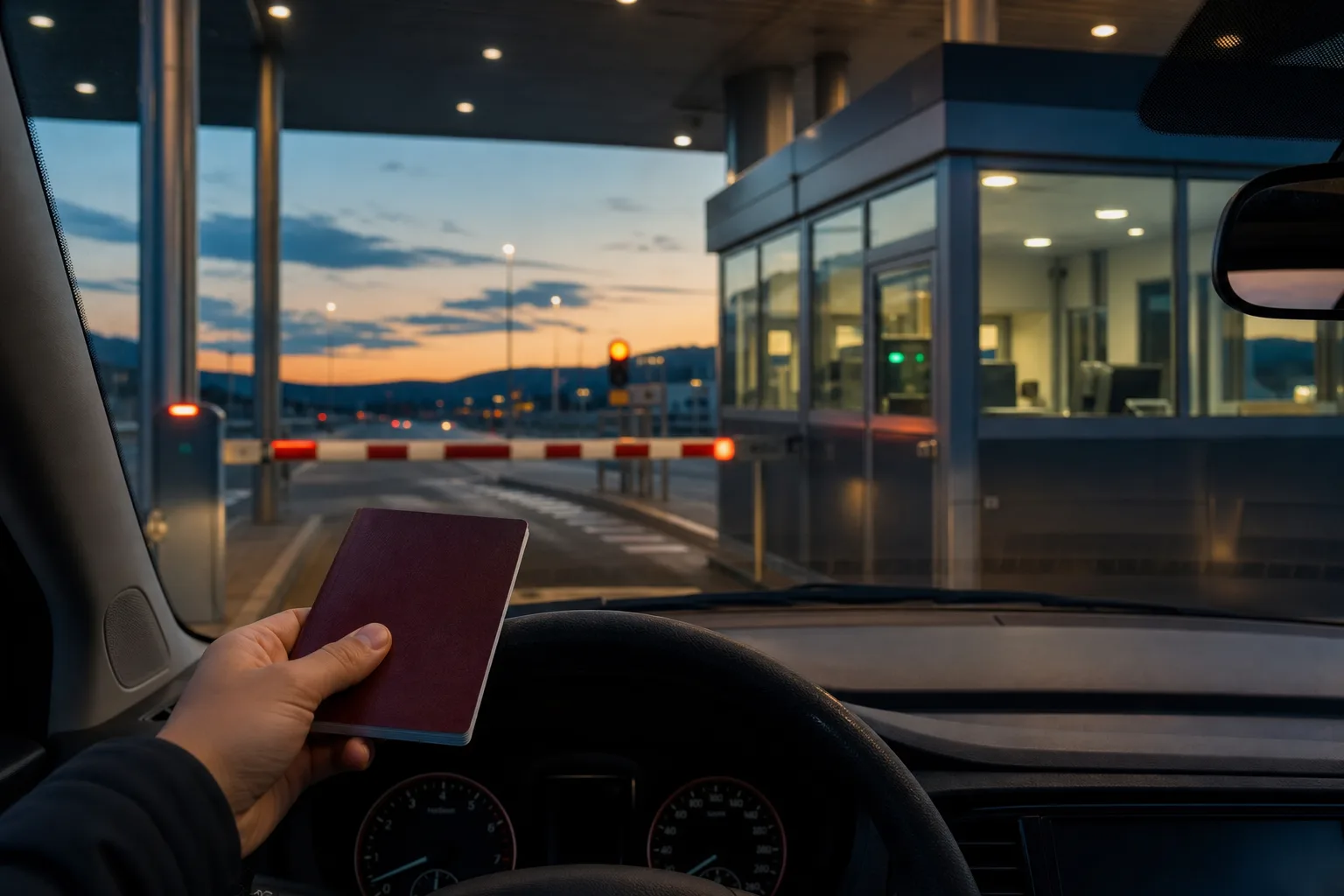
ETIAS, the EU’s new travel authorisation for visa-exempt visitors, starts operating in the last quarter of 2026, per the EU’s official ETIAS portal. It costs €20 (free for under-18s and over-70s, who still apply), applies to travellers from visa-free countries such as the UK, and it will be checked at road borders exactly as at airports. It is not a visa: it’s an online pre-authorisation, and the EU will announce the exact start date several months ahead on its official site.
For drivers, the honest summary is calmer than the headlines. Nothing changes until launch, the application is designed to be quick for the overwhelming majority, and the main mistakes to avoid are practical ones: applying on a lookalike website that charges extra, or leaving the application to the ferry queue.
Key Takeaways
- ETIAS begins in the last quarter of 2026 (EU-confirmed timing); the exact date will be announced in advance on the official portal.
- It applies to visa-exempt non-EU travellers, including UK passport holders, for short stays across most of Europe.
- The fee is €20, with exemptions including under-18s and over-70s; the authorisation is expected to cover multiple trips over several years.
- Road borders are included: driving into the Schengen area triggers the same checks as flying.
- Apply ONLY through the official EU portal (travel-europe.europa.eu). Lookalike sites charge markups for a form the EU runs itself.
What ETIAS Is, and What It Isn’t
ETIAS (European Travel Information and Authorisation System) is the EU’s answer to systems like the US ESTA: an online screening for travellers who don’t need a visa. You apply before the trip, the system checks your details against EU databases, and the authorisation ties electronically to your passport.
What it isn’t: a visa, an interview, or a border queue of its own. The EU’s official material stresses that most applications should be approved in minutes, with a small share taking longer for manual checks. That’s why the practical advice is to apply when the trip is booked, not the night before the ferry.
Who Needs ETIAS
Visa-exempt non-EU nationals travelling to the Schengen area and associated countries: UK passport holders are the biggest driving population affected, alongside travellers from dozens of other visa-free countries. EU citizens and residents don’t need ETIAS.
The fee is €20 per application; travellers under 18 and over 70 still need an ETIAS but pay no fee, per the official portal. The authorisation is designed to cover repeated short stays for its multi-year validity period rather than a single trip, which suits the way frequent Channel-crossers actually travel.
The Driver’s Angle: Road Borders Count
ETIAS discussion tends to picture airports, but the system applies at the Schengen area’s external borders in every mode, and that includes the road and ferry entries drivers use: Dover-Calais and the Channel Tunnel into France, and every land crossing into the Schengen zone.
It also stacks on top of the EU’s Entry/Exit System (EES), which replaced passport stamps with biometric registration and completed its phased rollout at those same borders in April 2026. The sequence for a post-launch UK road trip becomes: ETIAS sorted online before travel, EES registration at the border on entry, and then Europe drives exactly as before.
What doesn’t change is everything after the border. ETIAS adds one online step; the rest of the pre-trip list carries on exactly as before:
- The documents a European drive requires stay the same.
- The vignettes and tolls per country still need sorting per route.
- The speed limits that reset at each crossing still reset.
What Drivers Should Do About ETIAS Now
Before launch, genuinely nothing: applications aren’t open, and any site claiming to take an ETIAS application today is at best premature and at worst a scam. The single useful preparation is knowing where the real application will live: the EU’s official portal at travel-europe.europa.eu, which will also announce the start date.
At launch, three habits will cover it:
- Apply when you book, not when you leave. Minutes for most, but the buffer costs nothing.
- Use the official portal only. Lookalike sites resell the same €20 form with a markup, and some are pure phishing.
- Check the passport, not just the ETIAS. The authorisation ties to your passport; renew the passport, and the ETIAS needs renewing too.
And since insurance is the other border-document drivers forget, a route that leaves the EU insurance zone still needs its Green Card, ETIAS or not.
The Short Version
ETIAS lands in the last quarter of 2026: €20, online, tied to your passport, and required for visa-exempt visitors including UK drivers at road borders as much as airports. Until launch there’s nothing to do except ignore the lookalike websites. After launch, it becomes one more item on the pre-trip list, sorted at booking time in minutes. The rest of the border homework hasn’t changed, and our European driving requirements checklist keeps the whole list in one place.
Frequently Asked Questions
Do I need ETIAS to drive to France in 2026?
Once it launches in the last quarter of 2026, yes: UK and other visa-exempt travellers will need ETIAS for Schengen-area trips, whether entering by car, ferry, tunnel, or plane. Before launch, nothing is required.
How much does ETIAS cost?
€20 per application through the official EU portal, with exemptions including applicants under 18 and over 70. Any site charging more is reselling the form with a markup.
Is ETIAS a visa?
No. It’s a pre-travel authorisation for people who don’t need a visa, closer to the US ESTA: an online form, checked against databases, tied electronically to your passport.
Where do I apply for ETIAS?
Only through the EU’s official portal at travel-europe.europa.eu (or its official app, once live). The EU has warned about lookalike sites; the official one is the only one to use.
Does ETIAS apply at the Channel Tunnel and ferry ports?
Yes. ETIAS applies at the Schengen area’s external borders in all modes, and juxtaposed French controls at Dover, Folkestone, and St Pancras mean the checks happen before you cross.
How long will ETIAS be valid?
It’s designed as a multi-year, multi-trip authorisation tied to your passport rather than a per-trip permit; the official portal carries the exact validity terms. Renew your passport and you’ll need a fresh ETIAS.
What’s the difference between ETIAS and EES?
EES is the biometric entry/exit registration that replaced passport stamps at the border, fully in place since April 2026. ETIAS is the pre-travel authorisation you sort online before the trip, from late 2026. A post-launch trip involves both, but only ETIAS needs anything from you in advance.
Sources
Ramis Kalkan
Ramis Kalkan leads growth at Vignetim. He writes about everything that makes European road trips smoother, from digital vignettes to eSIMs. Based in Ankara, usually mid-way through planning his next drive.