Tolls in Turkey: How the HGS System Works
Turkish motorways, bridges, and the Eurasia Tunnel all bill by licence plate through HGS. A practical guide to how the system works, what it costs, and how foreign drivers stay out of trouble.
 Ramis Kalkan
Updated: 12 min read
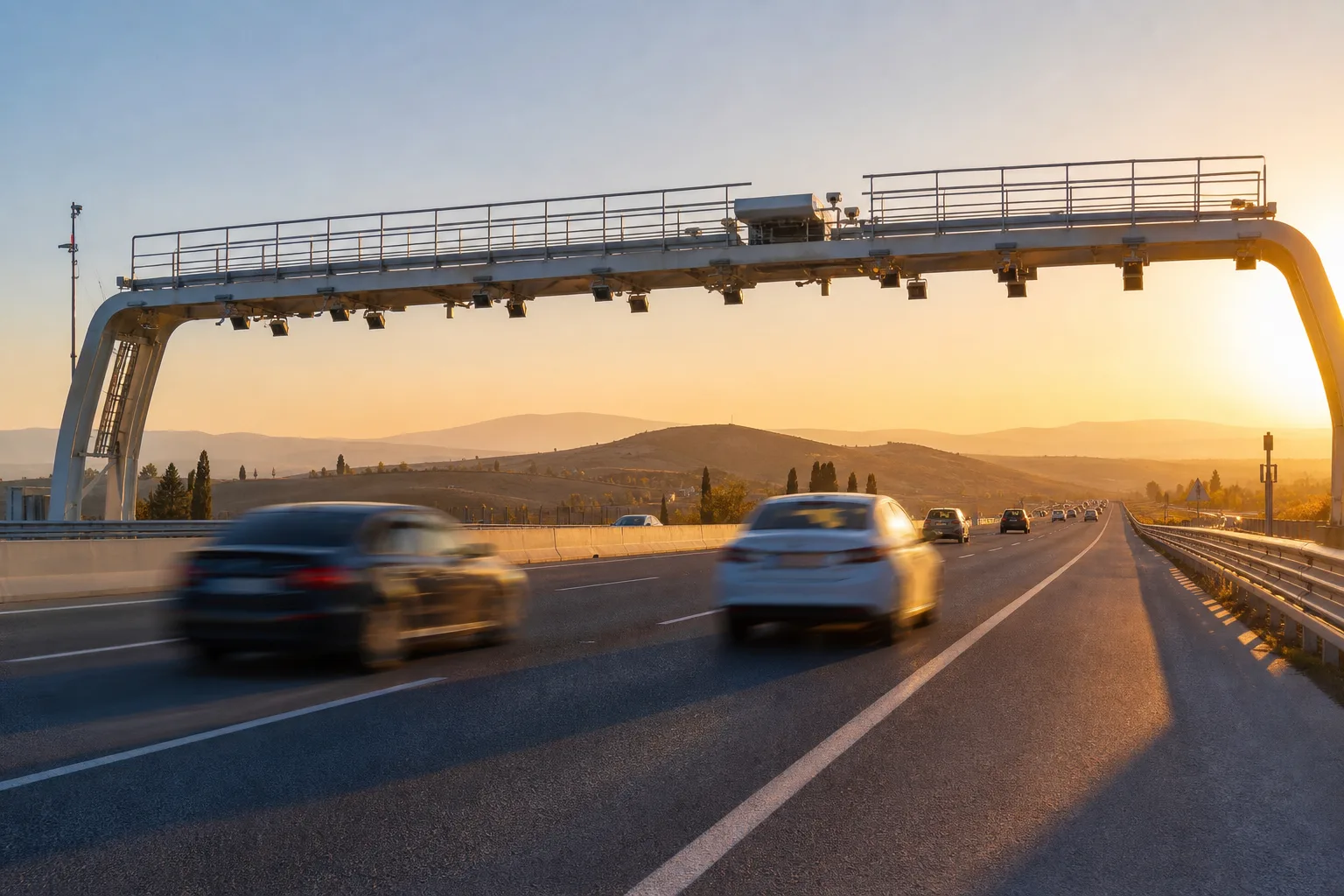
There are no cash lanes on Turkish motorways. Every toll road, bridge, and tunnel bills you through HGS (Hızlı Geçiş Sistemi). Cameras read your plate at the gantry, and the fee comes off a prepaid balance linked to it.
Drive through with no funded account and the crossing is logged as a violation. A clock starts running.
That clock is the part most visitors miss. You get 15 days from the crossing to put it right before a penalty lands. Miss it and there’s a second problem: customs now checks unpaid tolls before it lets a foreign-plated car leave.
This guide covers what HGS is, where it applies, and what a crossing costs in 2026. It also covers what a foreign-plated driver has to arrange. Every figure is a published official tariff, sourced and dated, because Turkish tolls change more than once a year.
Key Takeaways
- HGS is Türkiye’s only toll system, and one funded plate covers every motorway, bridge, and tunnel.
- Crossing unregistered isn’t an instant fine: you get 15 days to register and pay, then it’s one extra toll to day 45 and four times the toll after that (KGM).
- A car pays 59 TL for the older Bosphorus bridges and 1,170 TL for Osmangazi (KGM, July 2026).
What HGS Actually Is
HGS stands for Hızlı Geçiş Sistemi, which means “fast transit system”. It’s run since 17 September 2012. It works on two things at once: a prepaid balance and your licence plate.
Every toll point has overhead readers. You pass at normal speed, the system identifies the vehicle, and it takes the fee for that vehicle class from the balance on the plate. There are no barriers, no tickets, and nobody to pay.
The physical part of the system is a small RFID label. In practice, plate recognition does the work. That’s why a foreign-plated driver can be set up and charged correctly without ever holding a sticker.
One balance covers the whole network:
| Road type | Covered by the same HGS balance |
|---|---|
| State motorways (KGM) | Yes |
| Private (build-operate-transfer) motorways and bridges | Yes |
| Bosphorus bridges | Yes |
| Eurasia Tunnel | Yes, and it takes nothing else |
| Free-flow gantry sections | Yes, billed as you drive |
You don’t need a separate account, product, or app for different roads.
HGS is not a vignette
This trips up drivers arriving from Bulgaria, Hungary, or Austria. Those countries sell a vignette: a time-based sticker or e-vignette that lets you drive as much as you like while it’s valid.
Türkiye has nothing of the kind. Here’s how the two models differ:
| Vignette (Bulgaria, Austria, Hungary) | HGS (Türkiye) | |
|---|---|---|
| What you buy | A period of time | A prepaid balance |
| How you’re charged | Once, up front | Per crossing and per section |
| Price depends on | Duration you choose | Vehicle class and distance |
| Unlimited driving? | Yes, while valid | No, every pass is billed |
| Time-based pass available | Yes | No |
There’s no such thing as a “Turkey vignette”, whatever a reseller might call it.
Where You Have to Pay
Not every road in Türkiye is tolled. The rule of thumb is that the otoyol network (motorways, signed with an O-number and green signage) is tolled, while devlet yolu state roads are free.
You will pay HGS on:
- The motorway network, including the İstanbul–Ankara route, the İstanbul–İzmir corridor, and the Mahmutbey–Edirne motorway that carries traffic to the Bulgarian border
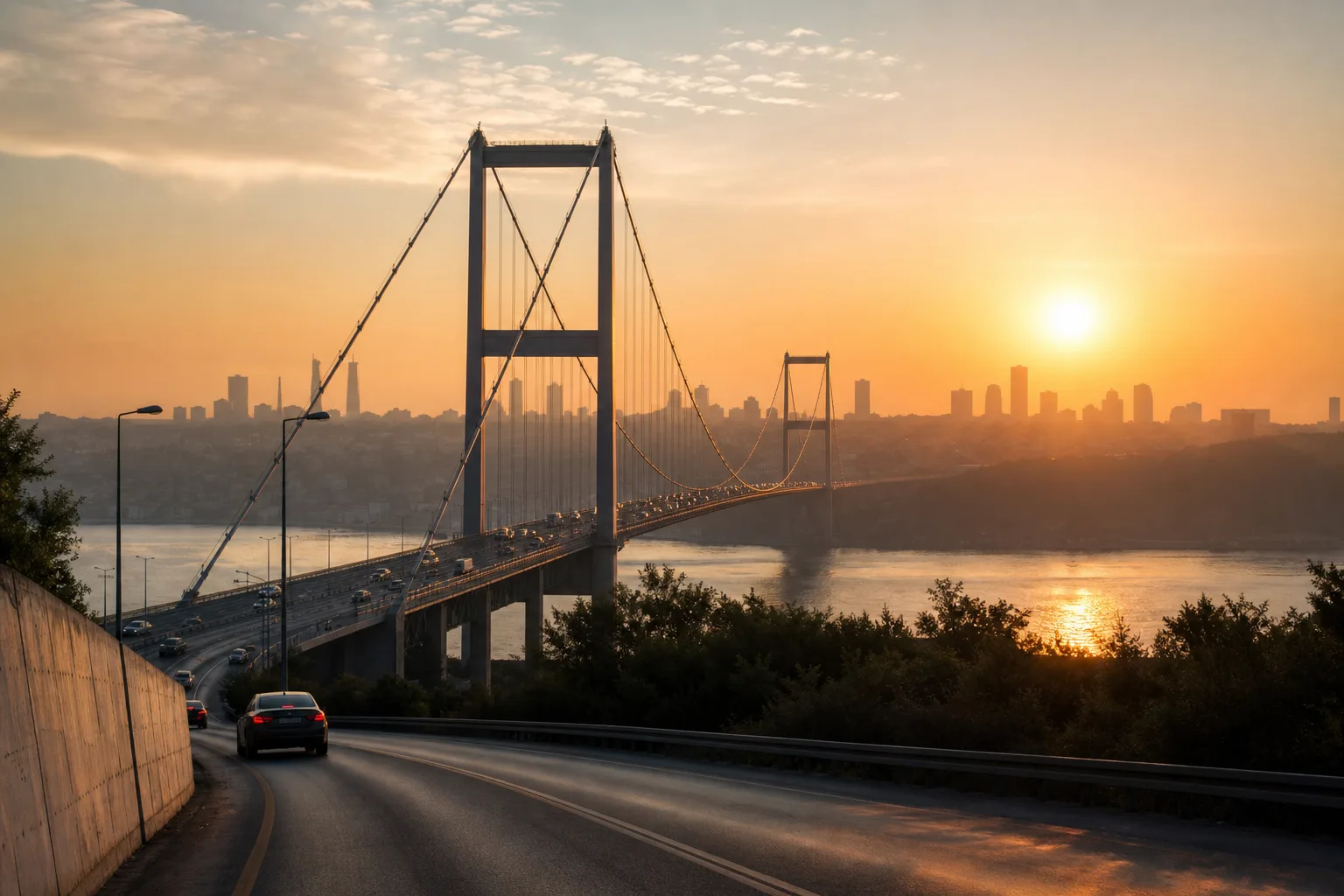
- The three Bosphorus bridges in İstanbul: 15 July Martyrs, Fatih Sultan Mehmet, and Yavuz Sultan Selim
- The mega-bridges: Osmangazi across the Gulf of İzmit and 1915 Çanakkale across the Dardanelles
- The Eurasia Tunnel, the road tunnel under the Bosphorus
- Free-flow gantry sections on the Northern Marmara Motorway, where there is no toll plaza at all and the charge is simply read as you drive
Coastal and rural routes generally cost nothing. So the toll question is usually about time, not access:
| Your priority | The choice |
|---|---|
| Speed and predictability | Take the motorway and pay the toll |
| Budget on a relaxed timetable | Take the free devlet yolu and add hours |
| Crossing the Bosphorus | You’ll pay either way, so pick by vehicle class |
| Long transit through Türkiye | Motorway almost always wins on total time |
For a full breakdown by facility and vehicle class, see our guide to Turkey toll prices in 2026.
What a Crossing Costs
Toll rates are set by the state and by the operating companies, not by resellers, and they are published per vehicle class with VAT included. Two increases landed in 2026: state motorway tariffs changed on 1 January and the bridges, private motorways, and the tunnel changed on 1 July.
Here’s what a car (Class 1) pays at the crossings foreign drivers actually meet. Rates are valid from 1 July 2026.
| Crossing | Class 1 (car) | Notes |
|---|---|---|
| 15 July Martyrs Bridge / Fatih Sultan Mehmet Bridge | 59 TL | Charged in both directions since 2022 |
| Yavuz Sultan Selim Bridge | 110 TL | The only Bosphorus bridge open to every vehicle class |
| Eurasia Tunnel (day, 05:00-23:59) | 330 TL | Half price overnight |
| Osmangazi Bridge | 1,170 TL | Türkiye’s most expensive crossing alongside 1915 Çanakkale |
| 1915 Çanakkale Bridge | 1,170 TL | The world’s longest suspension bridge |
| İstanbul (Mahmutbey) to Edirne, full motorway | 168 TL | The route to the Bulgarian border |
| İstanbul (Çamlıca) to Ankara (Akıncı), full motorway | 338 TL | About 380 km of motorway |
Sources: KGM 2026 tariff schedules and the Eurasia Tunnel operator, verified 20 July 2026.
Larger vehicles pay much more. A five-axle truck crossing 1915 Çanakkale pays 5,560 TL. So if you’re travelling in a van, a caravan, or a motorhome, check your class before you budget. Our guide to HGS vehicle classes explains how the classes work.
Two mechanics catch people out, and both are published in the KGM tariff notes:
- No entry record. You’re charged the longest-distance fare for the exit you used
- A U-turn. Leaving from the junction you entered is charged the same way
When you buy through Vignetim, no commission is added to any of these figures. The balance is spent at the official rate, and the service is the access, not a markup on the toll.
How a Foreign-Plated Driver Gets HGS
This is where the system, which is efficient for residents, becomes awkward for visitors.
The official retailer is PTT, the Turkish post office. Walk into a branch and you can buy a label the same day. PTT’s published rates are 140 TL for the adhesive label and 200 TL for the card, plus a balance load at purchase (PTT, July 2026). Fuel stations and 14 Turkish banks sell and top up HGS too.
The obstacle isn’t the price. It’s that these channels are built around Turkish residency:
| Channel | Open to a visiting driver? |
|---|---|
| PTT branch, in person | Yes, in Turkish, during office hours |
| e-Devlet portal | No, needs a Turkish ID |
| Turkish bank apps | No, needs a Turkish account |
| Vignetim app | Yes, plate-based, no ID required |
- Bank apps and the e-Devlet government portal require a TC kimlik, the Turkish national ID number
- PTT counters operate in Turkish, and the branch is rarely where you need it
- Every option assumes you’re already in the country, which is usually after your first tolled kilometre
Vignetim exists to remove that step. Foreign-plated HGS is sold in the Vignetim app: you register the plate, choose a balance, and the account activates immediately through plate recognition. There’s no branch visit, no Turkish bank account, and no physical label to wait for. You can do it from home before you travel, from the border queue, or from a service area after you’ve already crossed a bridge.
Bringing your own car? Start with HGS for foreign-plated vehicles. Our step-by-step walkthrough covers every option.
Renting instead? Hire cars come with an HGS account attached, and the agency recharges you later. The admin fees are covered in our guide to tolls in a rental car.
Picking the car up on arrival? See İstanbul Airport car rental and tolls.
What Happens If You Drive Through Without HGS
Nothing happens at the gantry. There is no barrier and no flashing light, and most drivers only discover the problem later, which is exactly why this matters.
KGM’s rule is generous if you act on it. Within 15 days of the crossing you need to do one of two things:
- Become an HGS subscriber with enough balance on the plate
- Pay the crossing through the tax administration’s online portal
Registering after the crossing counts. You haven’t lost anything by driving through unregistered, as long as you fix it inside the window.
After that, penalties are tiered:
| When you settle it | What you pay |
|---|---|
| Within 15 days of the crossing | The toll only, no penalty |
| Day 15 to day 45 | The toll plus one additional toll as a penalty |
| After day 45 | The toll plus an administrative fine of four times the crossing fee |
The day 15 to 45 tier applies whether or not a formal notice has reached you, so waiting for a letter is the expensive option.
There’s one more consequence that’s specific to foreign plates, and it’s the one worth remembering. Since 2026, Turkish customs checks for unpaid tolls and traffic fines before clearing a foreign-registered vehicle to leave the country. An unpaid 59 TL bridge crossing can become an argument at the border on the day you’re trying to get home.
The full mechanics, including how to check and pay a violation, are in what happens if you drive without HGS.
The İstanbul Question: Bridge or Tunnel
İstanbul is where most visitors meet the system, and the city is a special case because your vehicle decides your options.
Under the traffic authority’s rules, each crossing takes a different set of vehicles:
| Crossing | Who can use it |
|---|---|
| 15 July Martyrs Bridge | Cars, service vehicles, public transport, emergency vehicles |
| Fatih Sultan Mehmet Bridge | Cars and Class 2 vehicles including caravans, but no trucks or buses |
| Yavuz Sultan Selim Bridge | Every vehicle class, and compulsory for trucks, buses, and hazardous goods |
| Eurasia Tunnel | Cars, minibuses, and motorcycles only |
The tunnel is the most restricted crossing of all. It has a 5,000 kg weight limit and a 2.8 m height limit, and it bans towed trailers and caravans outright. It also takes no cash and no cards, only HGS, so it’s the one place where arriving without an account leaves you no option at all.
The tunnel’s overnight tariff is half the daytime rate between midnight and 04:59, which makes it the only major crossing in Türkiye with a night discount.
We cover the choice in detail in İstanbul bridge tolls and the Eurasia Tunnel.
What Changed: OGS Is Gone
Older guides mention OGS (Otomatik Geçiş Sistemi), a windscreen device you had to fit. It no longer exists. OGS was abolished on 31 March 2022, and the banks converted remaining accounts to HGS free of charge.
So there’s no choice to make and no device to buy. Any page that still presents HGS and OGS as live options is describing a system that ended four years ago. We explain the change in HGS vs OGS.
The Short Version
Türkiye’s toll network is fully electronic. One funded plate covers all of it: motorways, the Bosphorus bridges, the mega-bridges, and the tunnel. A car pays 59 TL for the older Bosphorus crossings and 1,170 TL for Osmangazi, at rates that moved twice in 2026.
Driving your own foreign-plated car? The problem isn’t cost, it’s access, because the official channels assume Turkish residency. Sort the plate before you reach a gantry, or within 15 days of passing one. Leave it, and the toll multiplies and follows you to the border.
Three things belong on the same pre-trip checklist:
- A funded HGS balance on the plate
- A Green Card insurance policy, because Türkiye sits outside the EU insurance zone
- A look at Turkish speed limits, which changed sharply in 2026
When you’re ready, you can set up HGS for your foreign plate before you reach the border.
Frequently Asked Questions
How do you pay tolls in Turkey?
Through HGS, and only through HGS. Toll points read your plate and take the fee from a prepaid balance, with no cash lanes, card terminals, or tickets anywhere. You fund it in advance, through Turkish channels like PTT and banks, or in the Vignetim app if you’re driving a foreign plate.
Can you pay HGS online?
Yes. Turkish residents top up through the PTT bank portal, e-Devlet, PTTAVM, or the HGS mobile app. Foreign-plated drivers don’t need any of those. HGS for a foreign plate is bought and topped up in the Vignetim app, which asks for no Turkish ID or bank account.
Where can I buy an HGS sticker?
In Türkiye, at any PTT branch, at fuel stations including Petrol Ofisi, Shell, BP, and Opet, and through 14 Turkish banks. As a visitor you usually don’t need a physical sticker. The system charges by plate recognition, so a foreign-plated account works instantly without one.
How much are tolls in Turkey?
It depends on the crossing and your vehicle class. In July 2026 a car pays 59 TL for the older Bosphorus bridges, 110 TL for Yavuz Sultan Selim, and 330 TL for the Eurasia Tunnel by day. Osmangazi and 1915 Çanakkale are 1,170 TL each, while İstanbul to Ankara costs 338 TL.
What happens if I use a toll road without HGS?
Nothing stops you at the time. You’ve then got 15 days to register and fund the plate, or pay online, with no penalty at all. Pay later and it’s one extra toll to day 45, then four times the toll, and unpaid crossings can block your car from leaving.
Do I need HGS if I’m renting a car?
Usually not as a separate purchase. Rental cars come with an HGS account attached, and the company bills you afterwards, often with an admin fee on top. Check the terms at the desk, because practice varies by agency and the fees aren’t always obvious.
Is HGS the same as a vignette?
No. A vignette buys you a period of time on a country’s motorways. HGS charges per crossing and per section, at a rate set by your vehicle class. There’s no time-based pass, and Türkiye doesn’t sell one in any form.
Sources
- Karayolları Genel Müdürlüğü – HGS
- Karayolları Genel Müdürlüğü – Vehicles With Foreign Licence Plates (PDF)
- Karayolları Genel Müdürlüğü – 2026 motorway and bridge toll tariffs
- Karayolları Genel Müdürlüğü – motorway restrictions and prohibitions
- PTT – HGS products, sales channels, and top-up
- Eurasia Tunnel (ATAŞ) – tolls and payment
Ramis Kalkan
Ramis Kalkan leads growth at Vignetim. He writes about everything that makes European road trips smoother, from digital vignettes to eSIMs. Based in Ankara, usually mid-way through planning his next drive.