Speed Limits in Spain: The Rules Foreign Drivers Get Wrong
Spain’s motorways run at 120 km/h, but the old rule letting you speed up to overtake is gone since 2022, and many city streets are now 30. Here are the limits by road type for foreign drivers.
 Ramis Kalkan
Updated: 6 min read
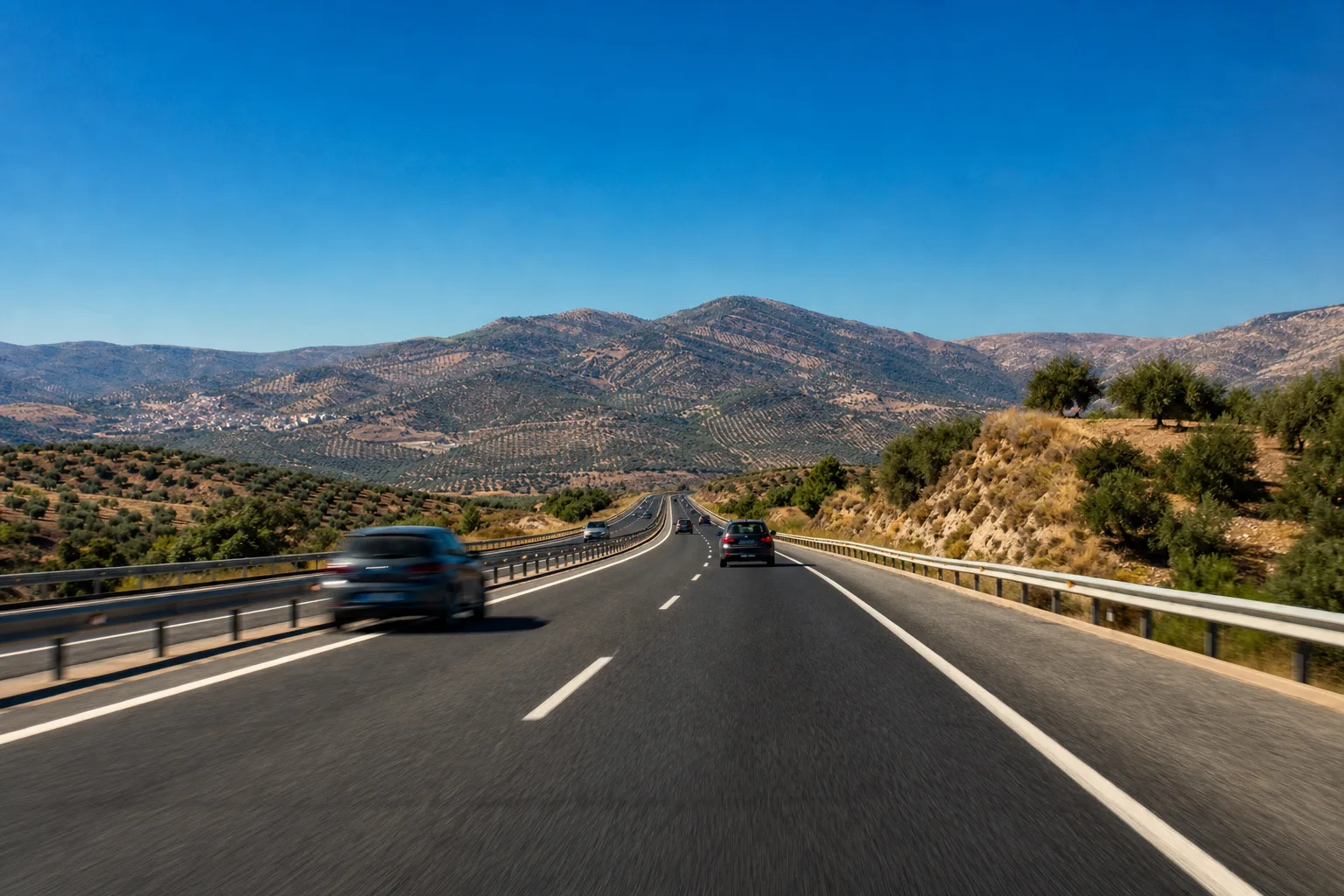
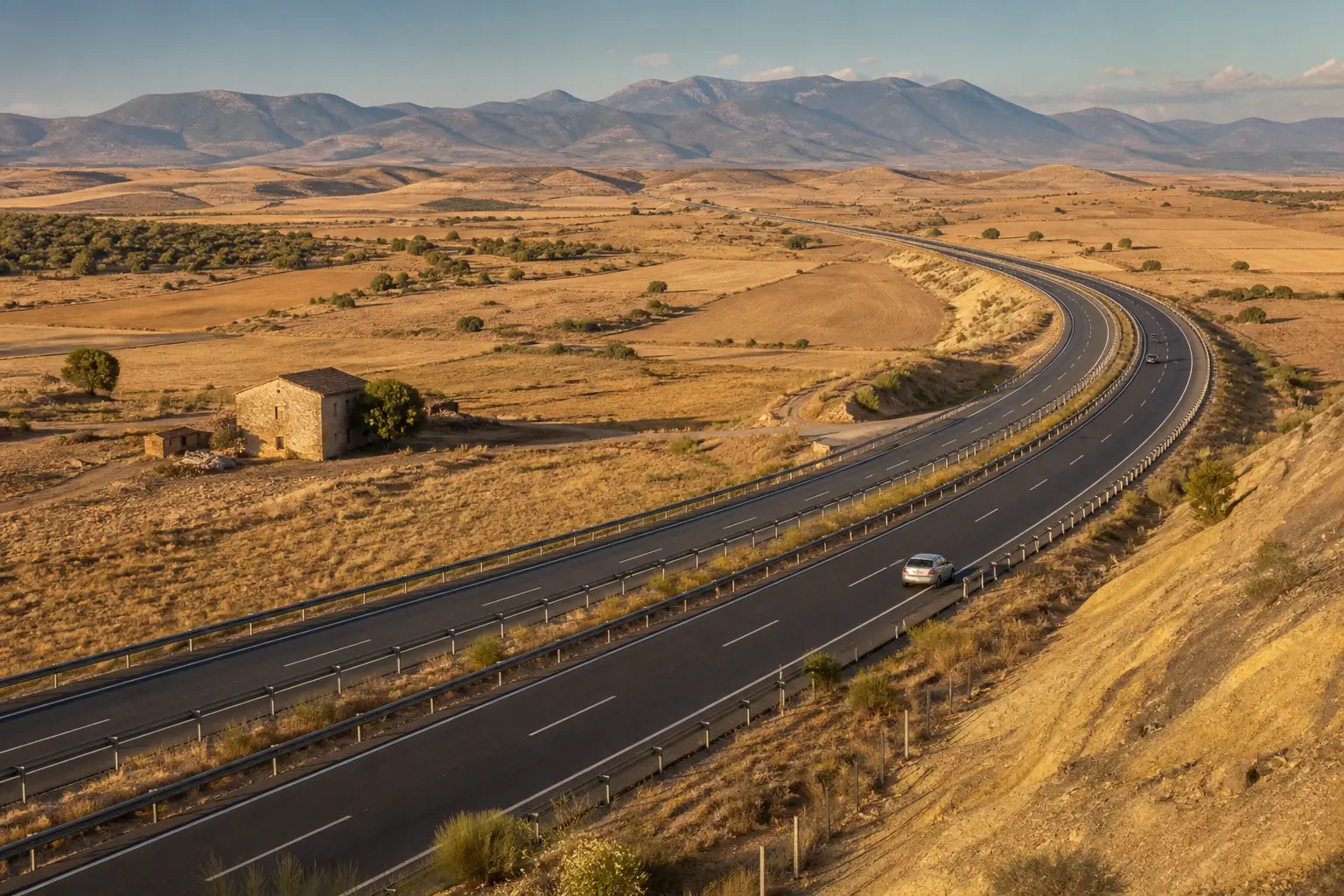
In Spain the motorway (autopista or autovía) speed limit is 120 km/h, conventional roads are 90, and towns are 50 or 30 depending on the street. That’s the easy part. The rule that trips up returning visitors is the overtaking margin, which Spain scrapped in 2022.
You used to be allowed to exceed the limit by 20 km/h to overtake on a conventional road. That’s gone. Since March 2022 the posted limit applies at all times, overtaking included, and plenty of guides still print the old rule. Spanish cities have changed too, with most single-lane streets now set to 30 km/h.
This guide covers the speed limit in Spain by road type, the 2022 and 2021 changes, the fines and alcohol limits, and the low-emission zones in the big cities. Every figure is tied to an official Spanish source.
Key Takeaways
- Spanish limits are 120 km/h on the autopista, 90 on conventional roads, and 50 or 30 in towns (DGT).
- The old +20 km/h overtaking margin was abolished in March 2022. The limit now applies even while overtaking.
- Since 2021, single-lane city streets default to 30 km/h, and single-platform streets to 20.
- The blood alcohol limit is 0.5 g/L, and 0.3 g/L for drivers with under two years’ experience.
- Spain charges motorway tolls (peaje), not a vignette. Big cities have low-emission zones (ZBE).
What Are the Speed Limits in Spain?
Spain sets its limits by road type, and the urban figure now depends on how the street is built. These come from the DGT (Dirección General de Tráfico, Spain’s traffic authority) and apply to a standard car.
| Road type | Speed limit for cars |
|---|---|
| Motorway / dual carriageway (autopista / autovía) | 120 km/h |
| Conventional road (carretera convencional) | 90 km/h |
| Urban road, two or more lanes each way | 50 km/h |
| Urban road, single lane each way | 30 km/h |
| Urban single-platform street (road and pavement level) | 20 km/h |
The city figures are the recent change. Since 2021 the default on a normal single-lane-each-way street is 30 km/h, not 50, so in practice most of the streets you drive in a Spanish town are 30 zones.
The Overtaking Rule That Changed in 2022
For years Spain let you go 20 km/h over the limit to overtake on a conventional two-way road. That margin was abolished on 21 March 2022. Now the limit is the limit, whether you’re following, cruising, or passing another car.
It matters because the change is recent enough that many travel guides, and plenty of drivers, still assume the old rule. If you learned to drive in Spain years ago or read an older guide, don’t rely on that 20 km/h cushion. It no longer exists, and the radars don’t make an exception for overtaking.
Enforcement is widespread and automated. Spain uses fixed and average-speed radars, and a Spanish speeding fine reaches drivers across the EU through the cross-border enforcement rules. A foreign plate won’t stop the fine from arriving.
Speeding Fines and Alcohol Limits in Spain
Spain scales its speeding penalties by how far over the limit you are, and they climb through clear steps:
- Small overspeed: a fine, no points.
- Larger overspeed: a bigger fine plus a licence-points deduction.
- Extreme overspeed: treated as a criminal offence, not a simple fine.
Because the exact brackets change, check the current figure rather than an old guide.
The alcohol rules are strict. The general blood alcohol limit is 0.5 g/L. For drivers with under two years’ experience, and for professional drivers, it drops to 0.3 g/L. That lower figure leaves almost no room, so if you’ve recently passed your test, treat it as no drinking before driving.
Low-Emission Zones in Spanish Cities
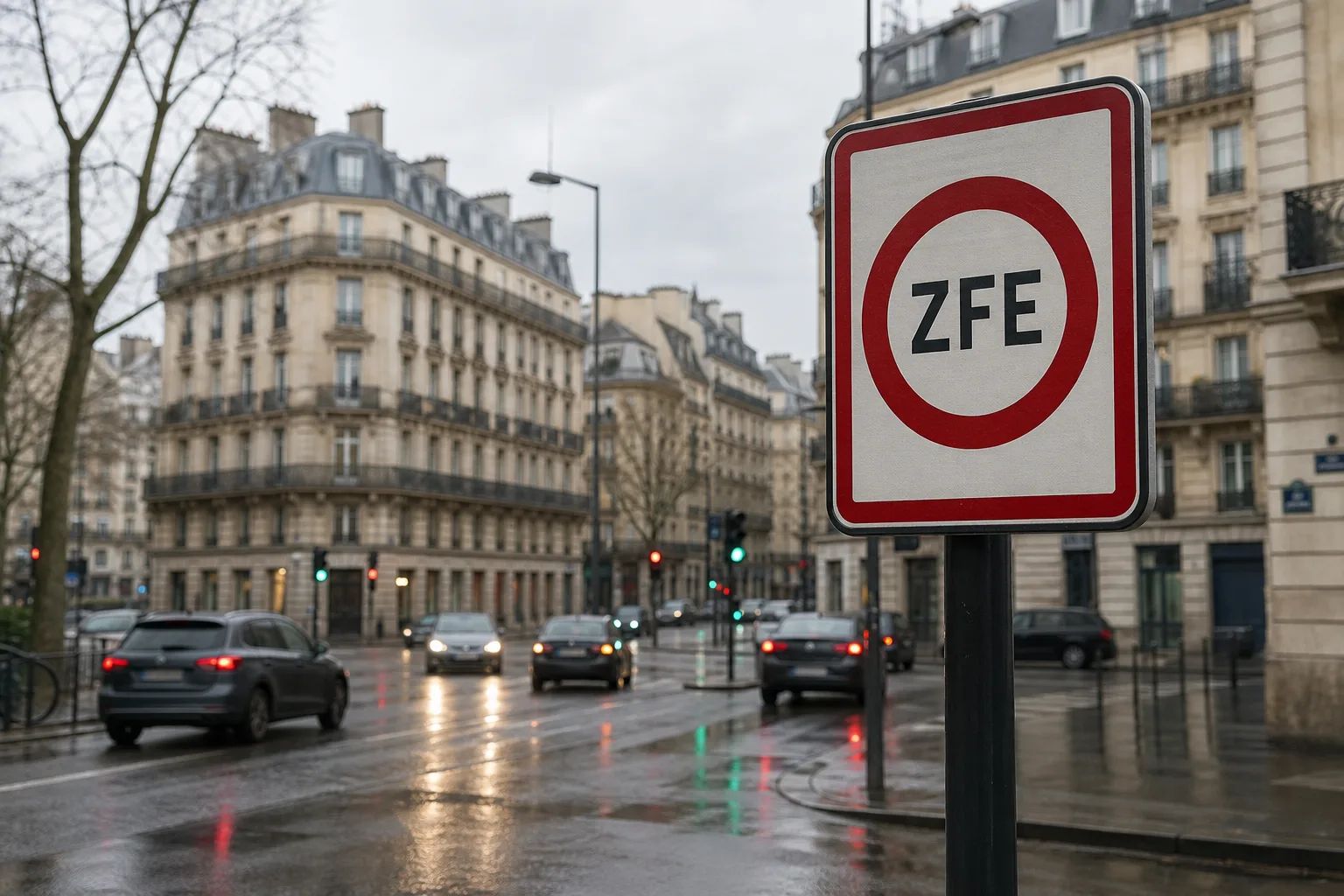
Speed isn’t the only city rule. Madrid, Barcelona, and every Spanish town over 50,000 people now run a low-emission zone (zona de bajas emisiones, or ZBE), and they can restrict older or non-registered foreign cars from the centre.
The rules vary by city and change often, so a few things are worth checking before you drive into a centre:
- Whether your car’s emissions rating is allowed in that city’s zone.
- Whether a foreign plate needs registering in advance to enter.
- Where the zone boundary sits, since the signs are easy to miss.
It’s a separate system from speed enforcement, but getting it wrong brings its own fine.
Spain Charges Tolls, Not a Vignette
Spain has no motorway vignette. Some autopistas are paid by toll (peaje) at barriers, many former toll roads are now free, and there’s no sticker to buy before you cross the border. If you want the background on why some countries toll and others use a sticker, we explain it in why some countries have no vignette.
Most drivers reach Spain overland through France, which is also a toll country, so our France speed limits guide covers the rules on the way down, including the wet-weather reductions. If your wider trip crosses a country that does use a sticker, our European vignette guide shows which ones need one and where.
The Short Version
The speed limit in Spain is 120 km/h on the autopista, 90 on conventional roads, and 50 or 30 in towns, with single-platform streets at 20. The rule to unlearn is the old +20 km/h overtaking margin, gone since 2022, so the posted limit now applies even while passing.
Keep under 0.5 g/L for alcohol, or 0.3 if you’ve under two years’ experience, and check the low-emission zone before driving into a big city. Spain charges tolls rather than a vignette, but if your route crosses a sticker country, sort that before the border.
Frequently Asked Questions
What is the speed limit on Spanish motorways? On the autopista and autovía the limit is 120 km/h for cars. Conventional two-way roads are 90 km/h. There’s no higher motorway limit, and the old overtaking margin no longer applies.
Can you still exceed the limit to overtake in Spain? No. The rule allowing 20 km/h over the limit to overtake on a conventional road was abolished on 21 March 2022. The posted limit now applies at all times, including while overtaking.
What is the speed limit in Spanish towns? Most single-lane-each-way streets are 30 km/h since the 2021 reform. Streets with two or more lanes each way are 50 km/h, and single-platform streets where the road and pavement are level are 20 km/h.
What is the drink-drive limit in Spain? The general blood alcohol limit is 0.5 g/L. For drivers with under two years’ experience, and for professional drivers, it is 0.3 g/L, which leaves almost no margin.
Do Spanish speeding fines reach foreign drivers? Yes. Spain uses fixed and average-speed radars, and fines reach vehicle keepers across the EU under the cross-border enforcement directive. A foreign registration does not prevent the fine.
Do I need to worry about low-emission zones in Spain? Yes, if you’re driving into a city centre. Madrid, Barcelona, and towns over 50,000 people run low-emission zones that can restrict older or non-registered foreign cars. Check the specific city’s rules before you go.
Sources
Ramis Kalkan
Ramis Kalkan leads growth at Vignetim. He writes about everything that makes European road trips smoother, from digital vignettes to eSIMs. Based in Ankara, usually mid-way through planning his next drive.