Speed Limits in France: The Limits That Drop in the Rain
France’s speed limits fall the moment it rains, and new drivers keep the lower figures all the time. Here are the limits by road type, plus the Crit’Air sticker that city-bound drivers need before they set off.
 Ramis Kalkan
Updated: 6 min read
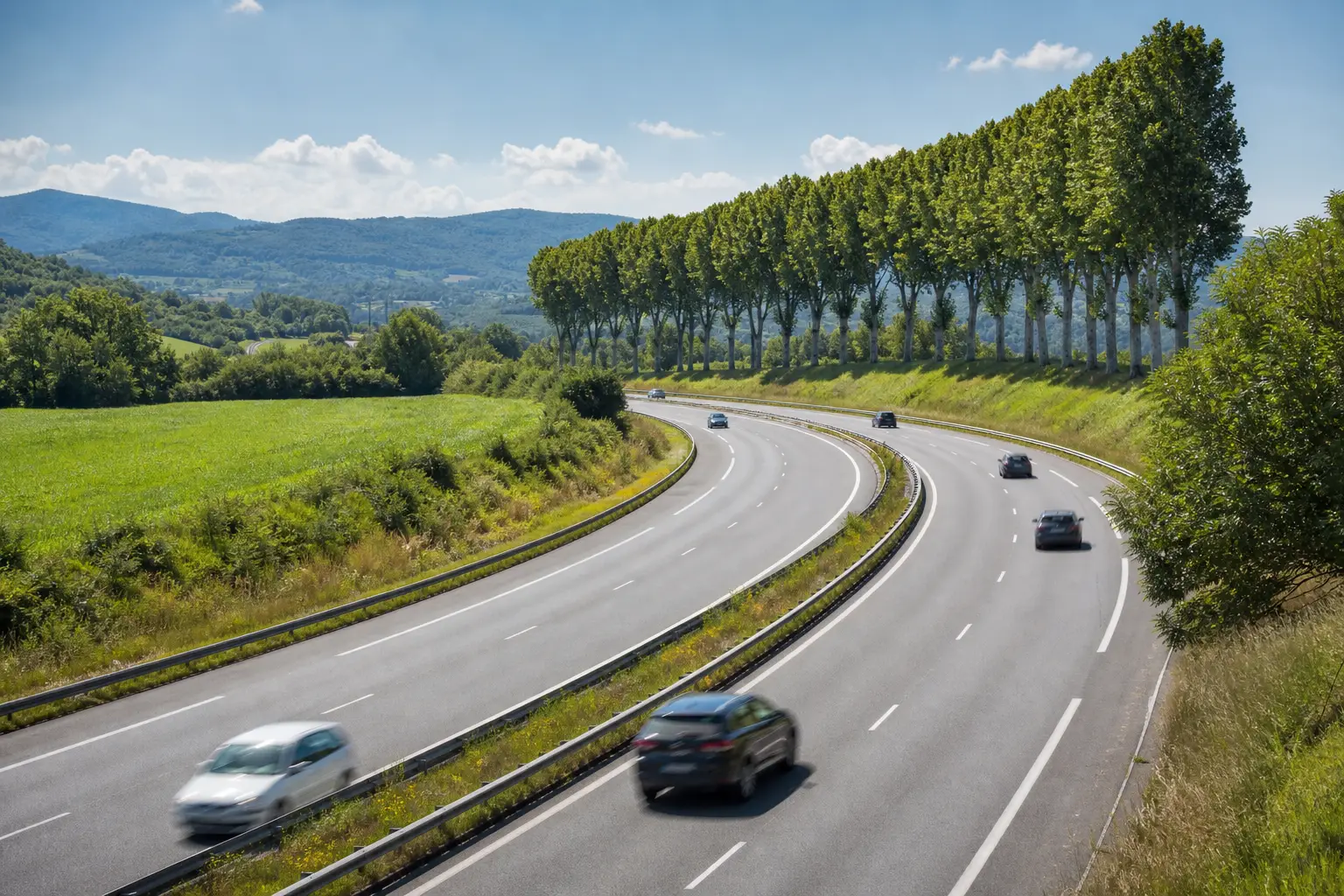
On a French autoroute the speed limit is 130 km/h in the dry, but it falls to 110 km/h the moment it rains. Rural roads are 80 km/h, dual carriageways 110, and towns 50. That wet-weather drop is the rule foreign drivers miss most, and it applies to every driver, not just beginners.
Here’s the part that catches people out. New drivers, in their first three years, keep those lower rainy-day limits all the time, dry or wet. And a French city trip needs more than the right speed: many centres are low-emission zones you can’t enter without a Crit’Air sticker on the windscreen.
This guide sets out the speed limit in France by road type, the wet-weather and novice rules, the fines and alcohol limits, and the Crit’Air sticker to sort before you go. Every figure is tied to an official French source.
Key Takeaways
- French limits are 130 km/h on the autoroute, 110 on dual carriageways, 80 on rural roads, and 50 in towns (Sécurité Routière).
- In the rain, the autoroute drops to 110 and dual carriageways to 100. New drivers keep those lower limits at all times.
- The rural single-carriageway limit has been 80 km/h since July 2018, but some départements restored 90, so read the signs.
- The blood alcohol limit is 0.5 g/L, and 0.2 g/L for drivers in their first three years.
- France charges autoroute tolls (péage), not a vignette. City centres need a Crit’Air low-emission sticker.
What Are the Speed Limits on French Roads?
France sets its limits by road type, and the key figure has two versions: one for dry weather and a lower one for rain. These come from the Sécurité Routière (French road safety authority) and apply to a standard car.
| Road type | Dry | Rain / new driver |
|---|---|---|
| Motorway (autoroute) | 130 km/h | 110 km/h |
| Dual carriageway (chaussées séparées) | 110 km/h | 100 km/h |
| Rural single-carriageway road | 80 km/h | 80 km/h |
| Built-up area (agglomération) | 50 km/h | 50 km/h |
Two details trip visitors up:
- The rural default has been 80 km/h since July 2018, but many départements later restored 90 km/h on selected roads. The number on the sign wins, so watch for it rather than assuming.
- French cities increasingly post 30 km/h zones across whole districts, not just outside schools.
The Rain Rule and New-Driver Limits
The wet-weather rule is the one thing to remember about driving in France. When it rains, the fast-road limits drop automatically, with no sign needed. The autoroute becomes 110 km/h, dual carriageways 100, and every driver’s expected to know it.
New drivers face the same reduced figures permanently. Anyone in the three-year probationary period after passing the test keeps to 110 on the autoroute, 100 on dual carriageways, and 80 on rural roads, whatever the weather. If that applies to you, treat the rainy-day column as your everyday limit.
Enforcement is heavy and automated. France runs a dense network of fixed and average-speed radars, and a French speeding fine reaches drivers across the EU through the cross-border enforcement rules. A foreign plate isn’t a shield.
Speeding Fines and Alcohol Limits in France
France scales speeding penalties by how far over the limit you are, and they climb quickly:
- Small overspeed: a fixed fine (amende forfaitaire) and licence points.
- Larger overspeed: a higher fine and more points.
- Serious overspeed: a fine, points, and a possible driving ban, with the car immobilised on the spot in extreme cases.
Because the exact brackets are revised over time, check the current figure rather than trusting an old guide.
The alcohol rules are strict too. The general blood alcohol limit is 0.5 g/L. For anyone in their first three years of driving, and for professional drivers, it drops to 0.2 g/L, which in practice means you shouldn’t drink at all before you drive.
The Crit’Air Sticker for French Cities
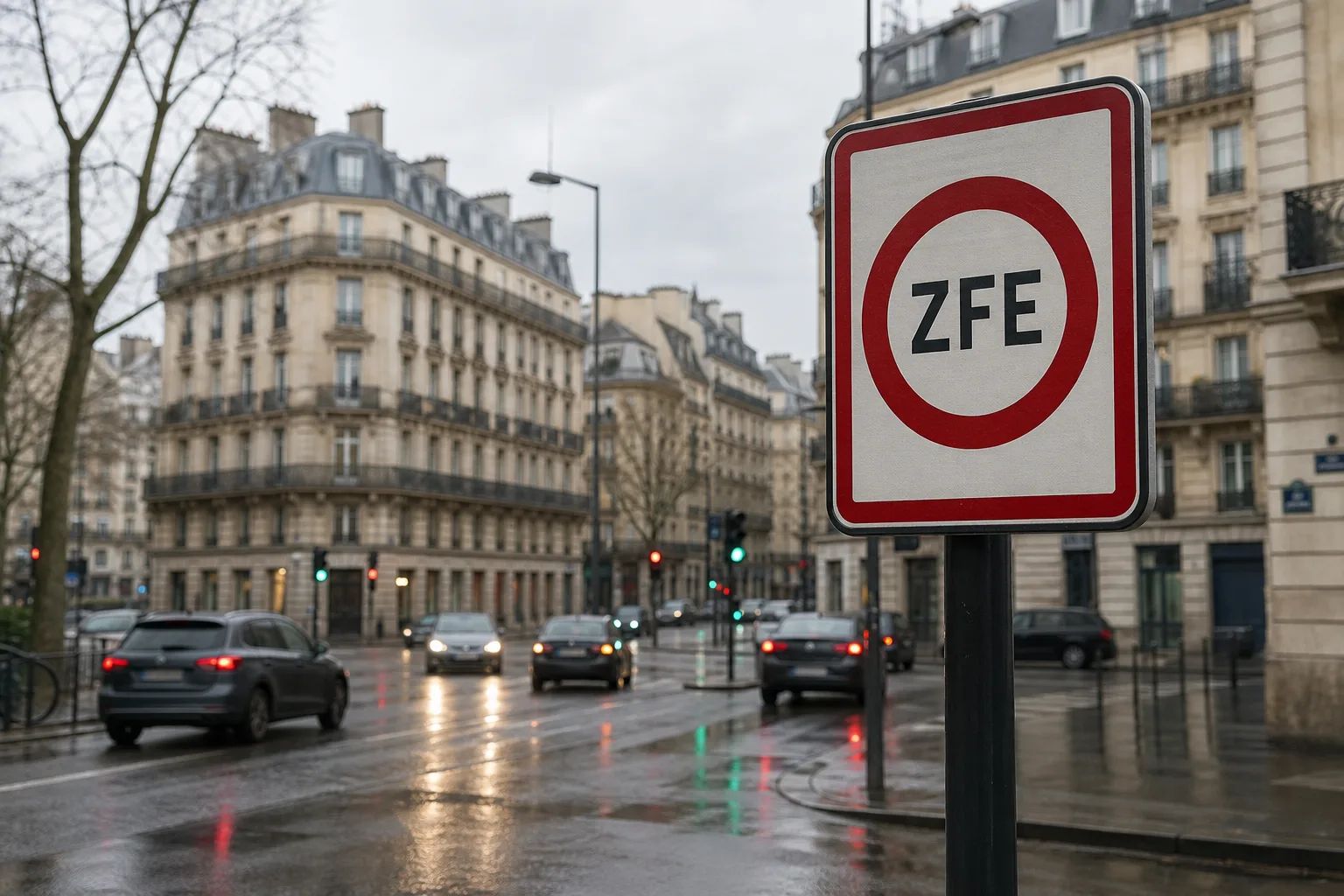
Speed is only half of a French city trip. Paris, Lyon, and a growing list of towns are low-emission zones (zones à faibles émissions, or ZFE), and you can’t drive into one legally without a Crit’Air sticker on the windscreen. It’s a small coloured disc that grades your car by its emissions.
The catch for visitors is timing. You order the Crit’Air sticker in advance and it arrives by post, so there’s no way to buy one at the edge of the zone on the day. Sort it before you leave home, fit it to the windscreen, and the low-emission zones stop being a problem. It’s a paperwork step, not a toll, but driving into a ZFE without a valid sticker is a fineable offence.
France Charges Tolls, Not a Vignette
France has no motorway vignette. Its autoroutes are paid by toll (péage), collected at barriers as you drive, so there’s no sticker to buy before you cross the border. If you want to understand why some countries toll while others use a sticker, we cover it in why some countries have no vignette.
Where France does matter for a vignette is the onward journey. Drive east into Switzerland and you need a Swiss motorway sticker before you join the motorway, so it’s worth arranging the Swiss vignette before you set off, and our Switzerland speed limits guide covers the different rules on that side. For a longer multi-country trip, our European vignette guide shows which countries need one.
The Short Version
The speed limit in France is 130 km/h on the autoroute, 110 on dual carriageways, 80 on rural roads, and 50 in towns, and the fast-road limits drop by 20 km/h in the rain. New drivers keep those lower limits all the time, and some rural roads have been signed back up to 90, so the sign is your guide.
Keep under 0.5 g/L for alcohol, or 0.2 if you’re a new or professional driver, and order a Crit’Air sticker before any city trip. France itself charges tolls rather than a vignette, but the moment you cross into Switzerland the sticker rule kicks in, so sort that ahead of the border.
Frequently Asked Questions
What is the speed limit on French motorways? On the autoroute the limit is 130 km/h in dry weather and 110 km/h in the rain. New drivers in their first three years keep to 110 at all times. The rain reduction applies automatically, with no sign needed.
What is the speed limit on French rural roads? The default on rural single-carriageway roads is 80 km/h, in place since July 2018. Many départements later restored 90 km/h on selected roads, so follow the posted sign. Dual carriageways are 110 km/h, dropping to 100 in the rain.
Do speed limits in France really drop when it rains? Yes. In wet weather the autoroute limit falls from 130 to 110 km/h and dual carriageways from 110 to 100 km/h. Rural single carriageways stay at 80. The reduction is automatic and expected of every driver.
Do I need a Crit’Air sticker to drive in French cities? Yes, to enter a low-emission zone (ZFE) such as Paris or Lyon your car needs a Crit’Air sticker on the windscreen. You order it in advance and it arrives by post, so there’s no buying it at the zone edge. Driving in without one is a fineable offence.
What is the drink-drive limit in France? The general blood alcohol limit is 0.5 g/L. For drivers in their first three years, and for professional drivers, it’s 0.2 g/L, which effectively means no alcohol before driving.
Do French speeding fines reach foreign drivers? Yes. France uses fixed and average-speed radars widely, and fines reach vehicle keepers across the EU under the cross-border enforcement directive. A foreign registration doesn’t stop the fine from arriving.
Sources
Ramis Kalkan
Ramis Kalkan leads growth at Vignetim. He writes about everything that makes European road trips smoother, from digital vignettes to eSIMs. Based in Ankara, usually mid-way through planning his next drive.