Speed Limits in Greece: Motorways, Tolls, and the Road to Turkey
Greece’s motorways run at 130 km/h, and the tolls are paid at booths, not bought in advance. Here are the speed limits by road type, plus what a Greece-to-Turkey drive needs.
 Ramis Kalkan
Updated: 5 min read
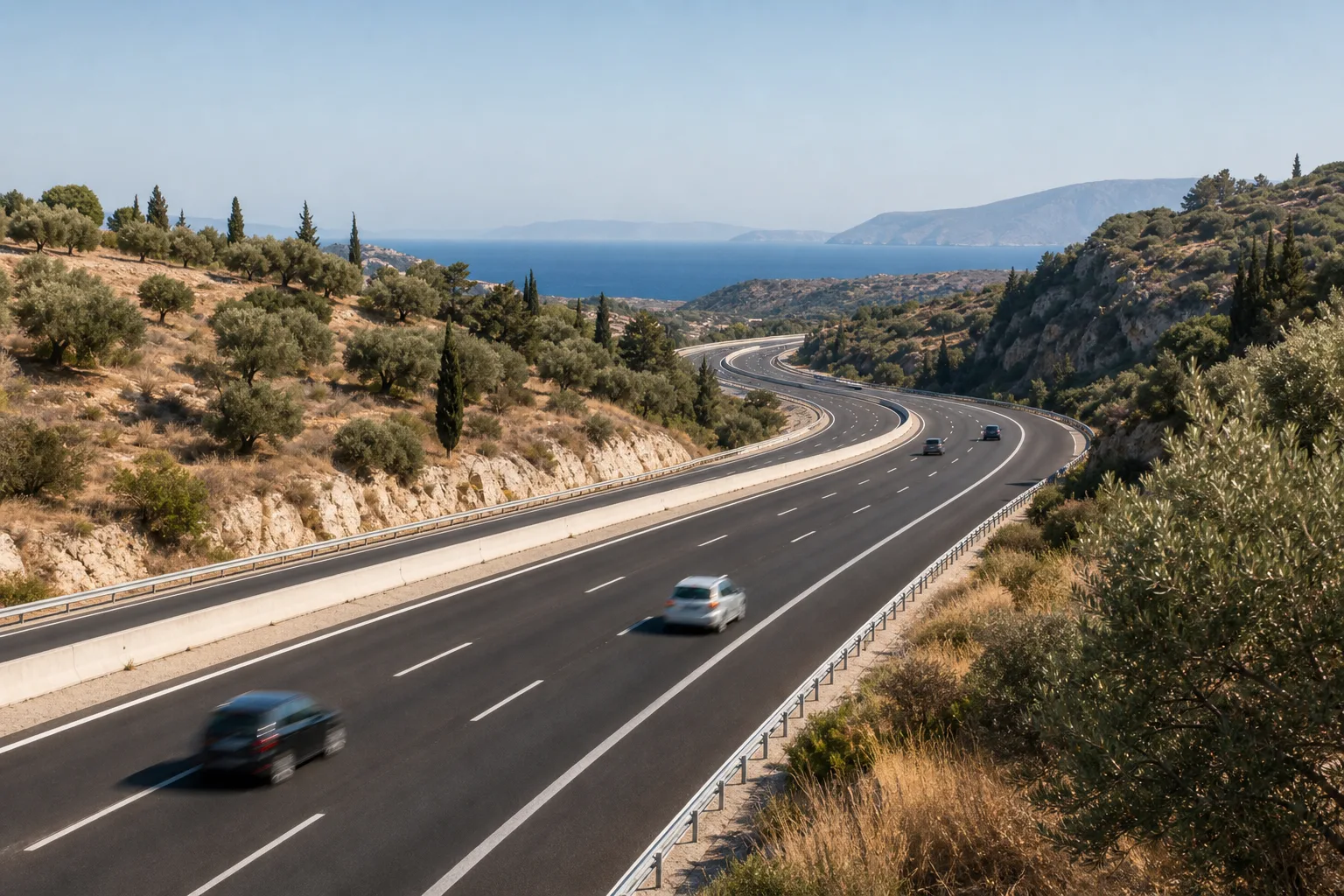
In Greece the motorway speed limit is 130 km/h, expressways are 110, rural roads 90, and towns 50. The speeds are straightforward. What surprises foreign drivers is the tolls, because Greek motorways are paid at booths as you go, not bought in advance, so you need cash or a card ready.
Here’s the wider point. Greece is the gateway between the Balkans and Turkey, so many drivers arrive from Bulgaria and continue east toward the Turkish border. Each leg has its own rules, and getting them lined up before you set off makes the whole trip smoother.
This guide covers the speed limit in Greece by road type, the fines and alcohol limits, how the tolls work, and what changes when you drive on into Turkey. Every figure is tied to an official source.
Key Takeaways
- Greek limits are 130 km/h on motorways, 110 on expressways, 90 on rural roads, and 50 in towns.
- Motorway tolls (diodia) are paid at booths along the way, so keep cash or a card handy.
- The blood alcohol limit is 0.5 g/L, and 0.2 g/L for novice, professional, and motorcycle riders.
- Greece charges tolls, not a vignette. There’s no sticker to buy before the border.
- Driving on into Turkey means new documents: HGS for the tolls and a Green Card for insurance.
What Are the Speed Limits in Greece?
Greece sets its limits by road type, in the standard European pattern. These come from the official road rules and apply to a standard car.
| Road type | Speed limit for cars |
|---|---|
| Motorway (autokinitodromos) | 130 km/h |
| Expressway | 110 km/h |
| Rural road | 90 km/h |
| Built-up (urban) area | 50 km/h |
Lower signed limits are common on the mountain and coastal roads, where bends and surface changes bring the figure down well below 90, so follow the sign rather than the default. Cities also add 30 km/h zones in busy centres.
How Greek Tolls Work
Greek motorways are tolled, but not with a sticker. You pay as you drive, at staffed booths (diodia) spaced along the motorway, and the amount depends on the section and your vehicle. A few things help:
- Have cash or a card ready as you approach a booth, since queues build when drivers fumble for payment.
- There’s no vignette to buy in advance, so don’t go looking for one. The charge is collected on the road.
- Booths can appear without much warning on the main corridors, so stay in a payment lane, not an electronic-pass-only one.
None of this is a vignette. If you want the background on why some countries toll at booths while others sell a sticker, we explain it in the wider European vignette guide.
Speeding Fines and the Alcohol Limit
Greece enforces speeding with cameras and police, particularly on the main motorway corridors, and fines reach foreign drivers across the EU. Because the exact brackets aren’t always easy to pin down, check the current figure locally rather than trusting an old guide.
The alcohol rules are strict, and stricter for some drivers:
- General limit: 0.5 g/L of blood.
- Novice (under two years), professional, and motorcycle riders: 0.2 g/L, which effectively means none.
Treat the 0.2 group as a no-alcohol rule, because the margin is too small to judge by feel.
Driving from Bulgaria, and On to Turkey
Greece is a transit country as much as a destination. Many drivers reach it overland from Bulgaria, so our Bulgaria speed limits guide covers that leg and its e-vignette, which Greece doesn’t share.
Heading the other way, east to the Turkish border at the Ipsala crossing, two documents come into play the moment you cross. Turkish motorways read your plate for tolls, so a foreign car needs HGS for the Turkish tolls, and because Turkey sits outside the EU insurance zone you also need a Green Card to be covered. Sort both before the border rather than at it, and the Greece-to-Turkey drive is smooth.
The Short Version
The speed limit in Greece is 130 km/h on motorways, 110 on expressways, 90 on rural roads, and 50 in towns, with lower signed limits on the twisting mountain and coastal routes. The tolls are paid at booths as you drive, so keep cash or a card ready, and there’s no vignette to buy beforehand.
Keep under 0.5 g/L for alcohol, or 0.2 if you’re a new, professional, or motorcycle rider. If you’re arriving from Bulgaria or driving on into Turkey, line up each country’s rules first, because Turkey adds HGS and a Green Card the moment you cross.
Frequently Asked Questions
What is the speed limit on Greek motorways? The motorway (autokinitodromos) limit in Greece is 130 km/h, and expressways are 110 km/h. Rural roads are 90 and towns are 50. Mountain and coastal roads often carry lower signed limits.
Do you need a vignette to drive in Greece? No. Greece has no vignette. Motorways are tolled at booths (diodia) as you drive, and you pay by cash or card at the gate. There’s nothing to buy before you cross the border.
What is the drink-drive limit in Greece? The general blood alcohol limit is 0.5 g/L. For novice drivers in their first two years, professional drivers, and motorcycle riders, it is 0.2 g/L, which effectively means no alcohol.
How do I pay tolls when driving in Greece? At staffed booths along the motorway, by cash or card, with the amount set by section and vehicle. Keep a payment method ready and stay out of the electronic-pass-only lanes unless you have a transponder.
What do I need to drive from Greece into Turkey? Two things change at the border. Turkish motorways charge tolls via the plate-read HGS system, so a foreign car needs an HGS balance, and because Turkey is outside the EU insurance zone you also need a Green Card. Arrange both before you reach the Ipsala crossing.
Sources
Ramis Kalkan
Ramis Kalkan leads growth at Vignetim. He writes about everything that makes European road trips smoother, from digital vignettes to eSIMs. Based in Ankara, usually mid-way through planning his next drive.