Speed Limits in Bulgaria: What Foreign Drivers Need to Know
You join the A1 outside Sofia at 140 km/h, sit on it for two hours, then watch the limit drop to 50 at a town edge with cameras at both signs. A practical guide to Bulgaria’s speed limits, fines and the vinetka.
 Ramis Kalkan
Updated: 8 min read
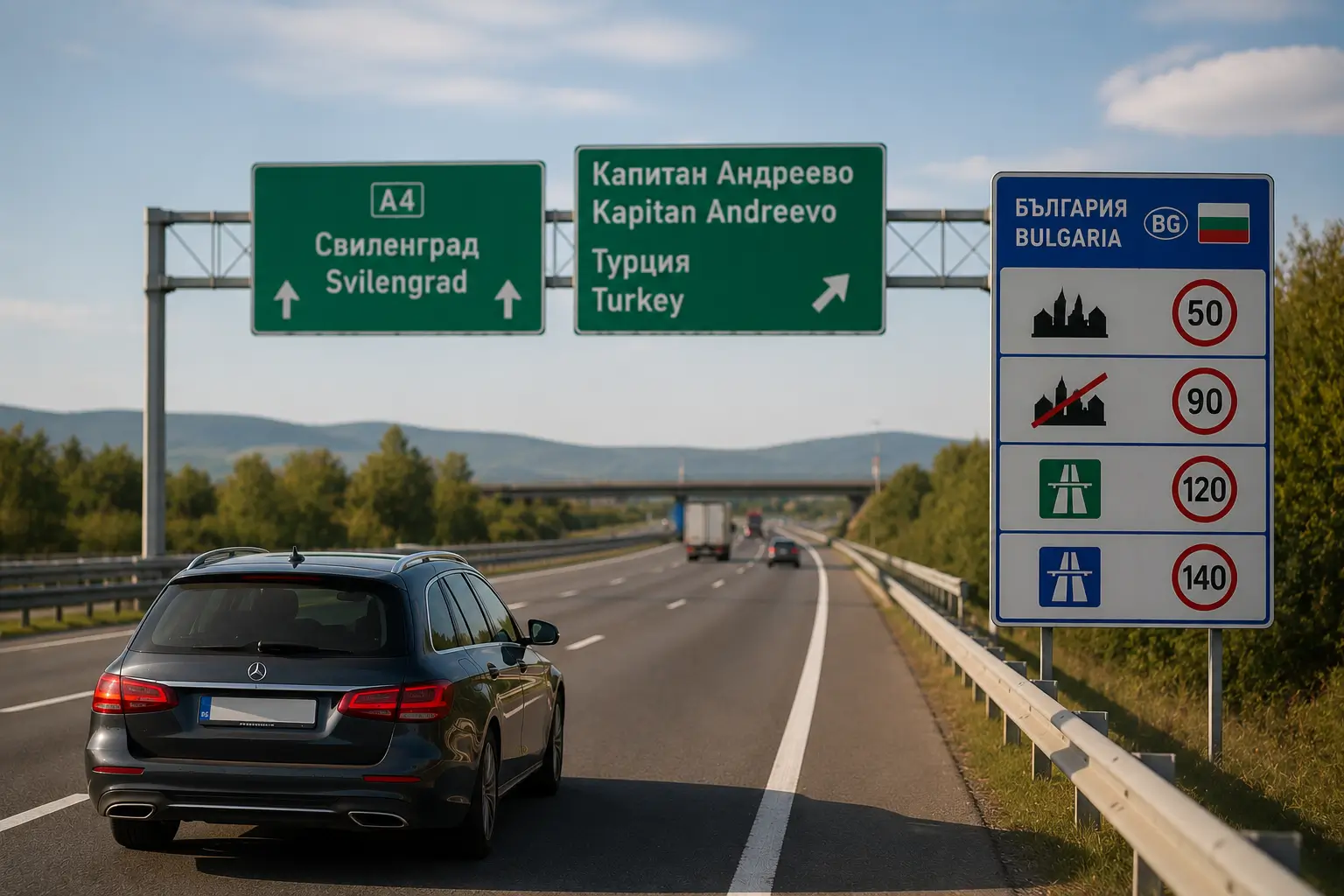
Bulgaria’s motorway speed limit for cars is 140 km/h, one of the highest in the EU. On expressways the limit drops to 120 km/h, outside built-up areas to 90 km/h, and inside towns to 50 km/h.
That 140 figure catches a lot of foreign drivers off guard. Most EU and UK motorways cap at 120 or 130, so visitors often sit well below the local flow and feel out of place. Bulgaria’s mix of true motorway, expressway, and first-class road also makes the limit shift faster than you might expect.
This guide covers the full speed-limit table, the 2026 fines, the 0.05 alcohol rule, the vinetka you’ll also need, and the practical extras for drivers continuing on to Turkey via Kapıkule. Every figure here is current and traced to an official source.
Key Takeaways
- Bulgaria’s motorway car limit is140 km/h. Expressway 120, rural 90, town 50.
- Parliament confirmed the 140 figure in July 2025 and added average-speed enforcement on motorways.
- The legal BAC limit is0.05% (0.5‰), with fines from €256 (500 BGN) and licence suspension above that.
- Cars up to 3.5 tonnes need a time-based e-vinetka. Trucks above 3.5 tonnes pay a separate GPS-based distance toll.
- Winter-rated tyres are mandatory from 15 November to 1 March, with a €26 to €102 (50 to 200 BGN) fine for non-compliance.
- Crossing into Turkey at Kapıkule means you’ll need HGS for tolls and a Green Card for insurance.
Bulgaria’s Speed Limits by Road Type
These limits apply by default for vehicles registered as Category B cars up to 3.5 tonnes. Lower limits always override where signs say so.
| Road type | Cars (up to 3.5t) | Trucks and buses (over 3.5t) |
|---|---|---|
| Built-up area | 50 km/h | 50 km/h |
| Outside built-up areas | 90 km/h | 70 km/h |
| Expressway (skorosten pat) | 120 km/h | 90 km/h |
| Motorway (avtomagistrala) | 140 km/h | 100 km/h |
| Vehicle with rigid tow | 40 in town and rural, 70 on expressway and motorway | – |
A few quick notes for foreign drivers:
- The built-up area rule kicks in at the white town-name sign and ends at the same sign crossed out. Cameras cluster at those edges.
- The 140 km/h figure only applies to actual motorway. Plenty of stretches that look like motorway on a map are first-class roads, where the rural 90 km/h limit applies.
- Towing rules are stricter than most EU countries. If you’re pulling a trailer or caravan, expect 70 km/h on motorways, not 100 or 120.
Why the Motorway Limit Is 140 (and What That Actually Means)
Bulgaria has had a 140 km/h motorway limit since 2012, when the constitutional court upheld it after years of debate. In July 2025 Parliament voted again and confirmed the figure, rejecting a proposal to lower it to 130. The same vote introduced average-speed enforcement on long motorway sections.
In practice, only the A1 (Trakia), A2 (Hemus), A4 (Maritsa), and A6 corridors offer extended motorway running. Many roads that look like highways on the map are first-class single carriageways, where the rural 90 km/h limit applies even when traffic moves faster.
Average-speed cameras change the game for foreign visitors. You can be fined on the average over a measured stretch, even if your speed at any single camera was legal. ANPR plate-recognition cameras catch you at both ends. The safest play when driving in Bulgaria is to cruise at about 130 on signed motorway, and watch for the lower posted limits at roadworks and urban edges.
Speeding Fines and the 0.05 Alcohol Rule
Bulgaria’s speeding fines are set in the Road Traffic Act and graduated by how far over the limit you are. Brackets are stricter inside town than on rural roads, which is the inverse of what some drivers expect.
Bulgaria adopted the euro on 1 January 2026, so the amounts below show euro first, converted at the fixed rate of 1.95583 leva to €1, with the exact statutory figure in leva (BGN) in brackets. The euro figures are rounded; the leva sum is the legal amount, and official notices still display both until August 2026.
Outside built-up areas:
| Over the limit | Fine |
|---|---|
| Up to +10 km/h | €10 (20 BGN) |
| +11 to +20 | €26 (50 BGN) |
| +21 to +30 | €51 (100 BGN) |
| +31 to +40 | €153 (300 BGN) |
| +41 to +50 | €205 (400 BGN) |
| +51 and above | €307 (600 BGN), plus €26 (50 BGN) for every extra 5 km/h over +50 |
In built-up areas:
| Over the limit | Fine |
|---|---|
| Up to +10 km/h | €10 (20 BGN) |
| +11 to +20 | €26 (50 BGN) |
| +21 to +30 | €51 (100 BGN) |
| +31 to +40 | €205 (400 BGN) |
| +41 to +50 | €307 (600 BGN) |
| +51 and above | €358 (700 BGN) plus a 3-month driving ban, with €26 (50 BGN) added for every extra 5 km/h over +50 |
The alcohol rule isn’t zero-tolerance, but the bands tighten fast:
- 0.5 to 0.8‰: €256 (500 BGN) fine and a 6-month licence suspension.
- 0.8 to 1.2‰: €511 (1,000 BGN) fine and a 12-month suspension.
- Above 1.2‰, or any repeat offence: criminal charge, with vehicle confiscation possible after the July 2025 Penal Code amendments.
A foreign driver caught above the legal limit can be detained at the roadside until paperwork is resolved. The fine itself follows you home through the EU’s cross-border traffic-enforcement framework.
The Vinetka You Also Need (Cars vs HGV Tolls)
If you drive a car or any vehicle up to 3.5 tonnes, you need a Bulgarian e-vinetka before you join the motorway or most first-class national roads. There is no sticker. The vinetka is linked to your registration plate, and roadside cameras check it automatically. It’s one of many European vignette systems, so on a longer trip across the continent you’ll often need more than one.
Bulgaria runs two completely separate systems:
- Cars and light vehicles (up to 3.5t): a time-based e-vinetka. Weekend, weekly, monthly, quarterly, and annual tiers.
- Trucks, buses, and HGVs (over 3.5t): a distance-based toll on a GPS satellite system, in place since 1 March 2020. No barriers, but a separate on-board unit and account.
If you’re driving a car, you only need the vinetka. You do not need a toll account, and you shouldn’t be sold one. For the current vinetka prices and validity tiers, sort your Bulgaria vignette before you cross the border.
Driving Onward to Turkey: HGS (Turkish Toll System), Green Card, and the Border
Bulgaria is the main land route from the EU into Turkey, and most drivers cross at Kapıkule on the A4 (Trakia) motorway. Your Bulgarian vinetka stops at the border. Two things on the Turkish side catch foreign drivers out:
- HGS for Turkish tolls. Turkish motorways scan your plate and deduct from a prepaid balance. There’s a 15-day grace window to fund the balance before a fine is issued. PTT (the official option) needs an in-person branch visit, so it’s easier to register and top up online through the Vignetim HGS toll system. You can set it up on the website or the Vignetim mobile app before you arrive, no branch queue required. Turkish motorways also run higher posted limits than Bulgaria’s expressways, see our guide to speed limits in Turkey before you cross.
- A Green Card for insurance. Turkey sits outside the EU motor-insurance zone, so your home policy doesn’t extend by default. You can buy a motor insurance Green Card through Vignetim and have it sorted before you reach Kapıkule.
Neither is something you can fix at the border kiosk in five minutes if you forget.
Winter Rules That Trigger Lower Limits
Bulgaria has a fixed winter-tyre period and a situational rule on top of it.
From 15 November to 1 March, every motor vehicle must use tyres suitable for winter conditions. That means M+S or 3PMSF tyres, or summer tyres with a tread depth of at least 4 mm that meet the winter grip requirement. Driving on bald summer tyres in this window carries a €26 to €102 (50 to 200 BGN) fine.
Snow chains can be required on signed mountain sections, particularly through the Vitosha, Rila, and Rhodope passes. Road and weather conditions also override the table limits. A snow warning sign or a roadworks section drops the limit immediately, and the A2 (Hemus) is regularly affected through the winter.
Conclusion
Bulgaria’s road rules are a touch more relaxed than the EU average on motorway speed but stricter on winter-tyre dates, and the country runs two different toll systems for cars and HGVs. Stick to 140 km/h on motorway, 120 on expressway, 90 outside town, and 50 in town. Watch for average-speed sections, keep your BAC below 0.5‰, and use winter-rated tyres from mid-November.
If you’re driving the EU-to-Turkey corridor, your prep doesn’t stop at the Bulgarian border. Sort your Bulgarian vinetka, then your HGS for Turkey, then your Green Card. All three can be handled from your phone before you leave, which is the difference between a calm border crossing and a stressful one.
For the current vinetka prices and validity tiers, see your Bulgarian vinetka.
Frequently Asked Questions
Is Bulgaria’s motorway speed limit 140 km/h for cars?
Yes. The 140 km/h figure has been in force since 2012 and Parliament confirmed it again in July 2025 after voting down a proposal to lower it to 130 km/h.
Can I be fined for average speed in Bulgaria?
Yes. After the July 2025 amendments, cameras measure your average over a fixed motorway section. You can be fined on the average even if your instantaneous speed was legal at each individual camera.
Do I need a vignette in Bulgaria as a foreign driver?
Yes, if your car is up to 3.5 tonnes and you use motorways or most first-class national roads. The e-vinetka is plate-linked and digital. You can sort it before you cross the border.
What is the drink-drive limit in Bulgaria?
The legal BAC limit is 0.05% (0.5‰). Above 0.5‰ you face a €256 (500 BGN) fine and a six-month suspension. Above 1.2‰, or any repeat offence, it becomes a criminal matter with possible vehicle confiscation.
Are winter tyres mandatory in Bulgaria?
Yes, between 15 November and 1 March. The legal minimum tread is 4 mm, and summer tyres are only allowed if they meet the winter grip requirement. Driving on non-compliant tyres carries a €26 to €102 (50 to 200 BGN) fine.
I’m driving on to Turkey via Kapıkule. Anything I need before crossing?
Yes. You’ll need HGS for Turkish tolls and a Green Card because your EU or UK insurance doesn’t extend into Turkey by default. Both are best sorted before you reach the border.
Sources
BTA (140 km/h confirmation), Road Traffic Act fine schedule, Bulgarian Ministry of Interior, ETSC drink-driving Bulgaria, Sofia Globe (winter tyres), tollpass.bg (HGV toll).
Ramis Kalkan
Ramis Kalkan leads growth at Vignetim. He writes about everything that makes European road trips smoother, from digital vignettes to eSIMs. Based in Ankara, usually mid-way through planning his next drive.