Speed Limits in Estonia: Slow Roads and a Near-Zero Alcohol Limit
Estonia has no motorways to speak of, tops out around 90 to 110, and holds every driver to a near-zero 0.2 alcohol limit. Here are the speed limits by road type, plus the winter-tyre rule.
 Ramis Kalkan
Updated: 4 min read
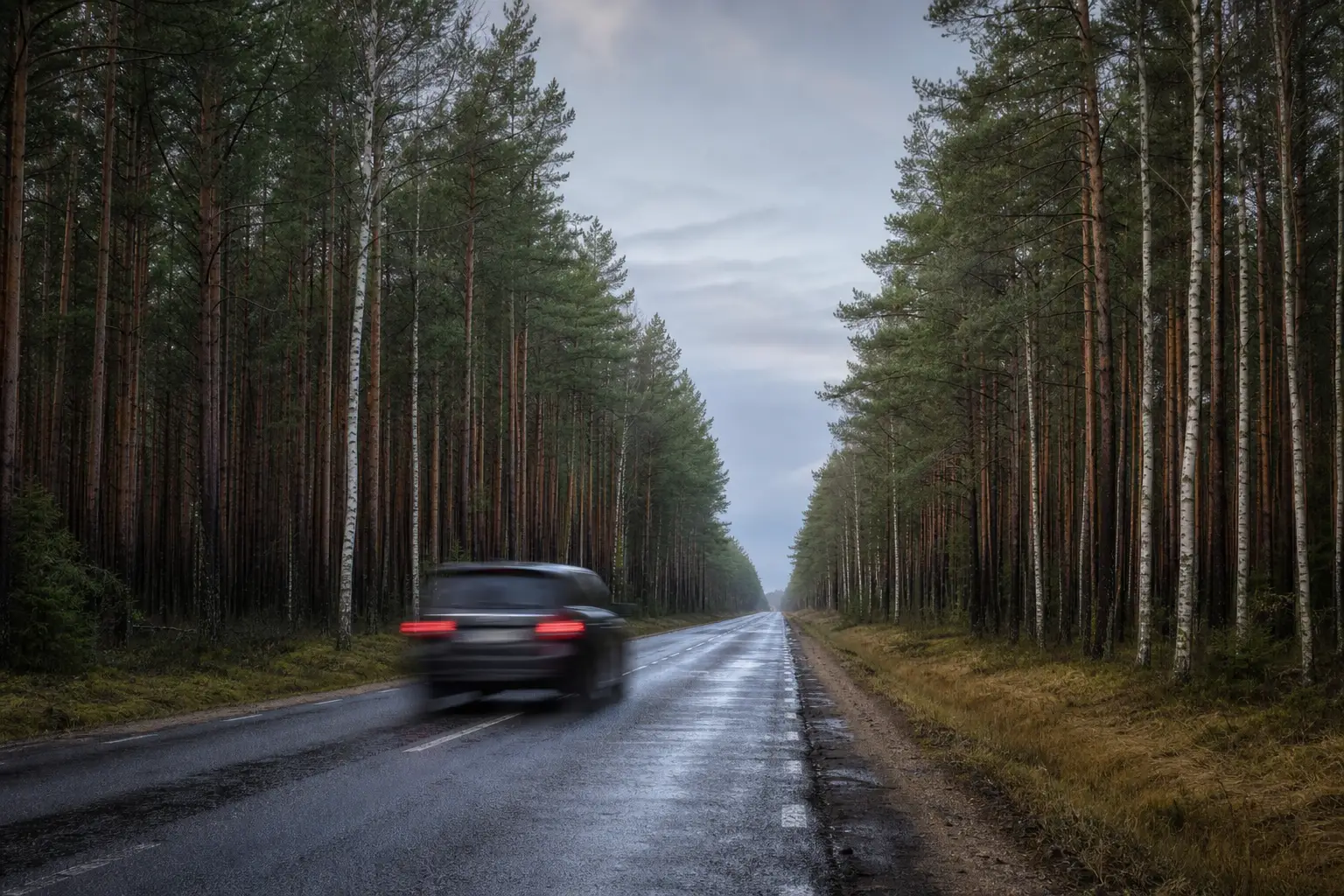
In Estonia the speed limit is 50 km/h in towns and 90 km/h on rural roads, and that 90 is about as fast as it gets. Estonia has no classic motorways, so the open-road figure only rises to around 110 on the better dual carriageways in summer. The rule that catches foreign drivers out isn’t speed, it’s alcohol: the limit is a near-zero 0.2.
Here’s the shape of driving here. It’s a calm, low-speed country where a heavy right foot gains you little, and where a single drink can put you over the alcohol limit. Add the winter-tyre season and year-round headlights, and you have the whole picture.
This guide covers the speed limit in Estonia by road type, the strict alcohol limit, and the seasonal rules. Every figure is tied to an official source.
Key Takeaways
- Estonian limits are 50 km/h in towns and 90 km/h on rural roads.
- There are no classic motorways; the fast roads reach about 110 km/h only on the better dual carriageways in summer.
- The blood alcohol limit is 0.2 for every driver, so one drink can put you over.
- Winter tyres are mandatory in the cold season, and headlights must be on day and night, year-round.
- Estonia is free for cars: no vignette, and the only road charge is for heavy goods vehicles.
What Are the Speed Limits in Estonia?
Estonia sets its limits by road type, and the top figure is lower than in most of Europe because the country has no motorway network. These come from the official road rules and apply to a standard car.
| Road type | Speed limit for cars |
|---|---|
| Urban (built-up) area | 50 km/h |
| Rural / non-urban road | 90 km/h |
| Better dual carriageways (summer, where signed) | up to 110 km/h |
The 110 figure is the exception, not the rule. It applies only on certain higher-standard roads and only in the warmer months, switched on by signs, so treat 90 as the normal open-road limit and watch for the seasonal boards.
The 0.2 Alcohol Limit and the Seasonal Rules
Estonia’s strictness is about alcohol and the seasons, not speed. Three rules matter more than the numbers on the speed signs:
- Alcohol: 0.2 for everyone. The blood alcohol limit is 0.2, one of the lowest in Europe, with no separate, more relaxed figure for experienced drivers. A single drink can put you over, so the safe approach is none.
- Winter tyres are mandatory in the cold season. A summer visitor rarely meets this, but an early or late trip can, and hire cars should already be fitted.
- Headlights on, always. Dipped headlights or daytime running lights must be on day and night, year-round, not just after dark.
Enforcement is by camera and police, and fines reach foreign drivers across the EU, so the low limits and the alcohol rule both bite.
Estonia Is Free for Cars
Estonia has no car vignette and no car toll. You can drive its roads without buying anything in advance, and the only charge on the network is a road-user fee for heavy goods vehicles, which doesn’t apply to cars. If you want the background on why some countries stay free while others sell a sticker, we explain it in why some countries have no vignette.
Estonia sits at the top of a natural route south through the Baltics and into Poland, which shares the same near-zero 0.2 alcohol limit but drives much faster. Our Poland speed limits guide covers that leg and its EU-high 140 km/h motorways. For a wider trip that does cross a sticker country, our European vignette guide shows where one is needed.
The Short Version
The speed limit in Estonia is 50 km/h in towns and 90 km/h on rural roads, rising only to about 110 on the better summer-signed dual carriageways, because the country has no classic motorways. Speed isn’t where Estonia catches you out.
The alcohol limit is the one to respect: 0.2 for every driver, which really means none. Keep your headlights on year-round, expect winter tyres in the cold months, and remember Estonia is free for cars, so there’s nothing to buy for the roads unless your trip crosses into a vignette country.
Frequently Asked Questions
What is the speed limit on Estonian roads? Towns are 50 km/h and rural roads are 90 km/h. Estonia has no classic motorways, so the fastest limit is about 110 km/h, and only on certain higher-standard dual carriageways in summer.
Does Estonia have motorways? Not in the usual sense. Estonia’s main roads are single or dual carriageways rather than full motorways, so the open-road limit is 90 km/h, rising to around 110 only on the best summer-signed stretches.
What is the drink-drive limit in Estonia? Estonia’s blood alcohol limit is 0.2, one of the lowest in Europe, and it applies to every driver. A single drink can put you over, so the safe approach is no alcohol before driving.
Do I need a vignette to drive in Estonia? No. Estonia is free for cars, with no vignette and no car toll. The only road charge is a road-user fee for heavy goods vehicles, which doesn’t apply to a car.
Do I need winter tyres in Estonia? Yes, in the cold season. Winter tyres are mandatory during the winter months, and headlights must be on day and night year-round, so an off-season visitor should check both.
Sources
Ramis Kalkan
Ramis Kalkan leads growth at Vignetim. He writes about everything that makes European road trips smoother, from digital vignettes to eSIMs. Based in Ankara, usually mid-way through planning his next drive.