Driving in Turkey: What Foreign Drivers Need to Know
Turkey drives on the right, your licence probably works, and the motorways are excellent. The three things that genuinely catch foreign drivers: HGS tolls, insurance, and the brand-new 2026 fine system.
 Ramis Kalkan
Updated: 11 min read
Driving in Turkey is easier than most first-timers expect. Turkey drives on the right, a foreign licence is accepted for up to six months per entry for tourists, and the motorway network is modern and fast. The three things that genuinely catch foreign drivers out are the HGS electronic toll system, motor insurance (EU policies don’t cover Turkey without a Green Card), and a strict new fine system introduced in February 2026.
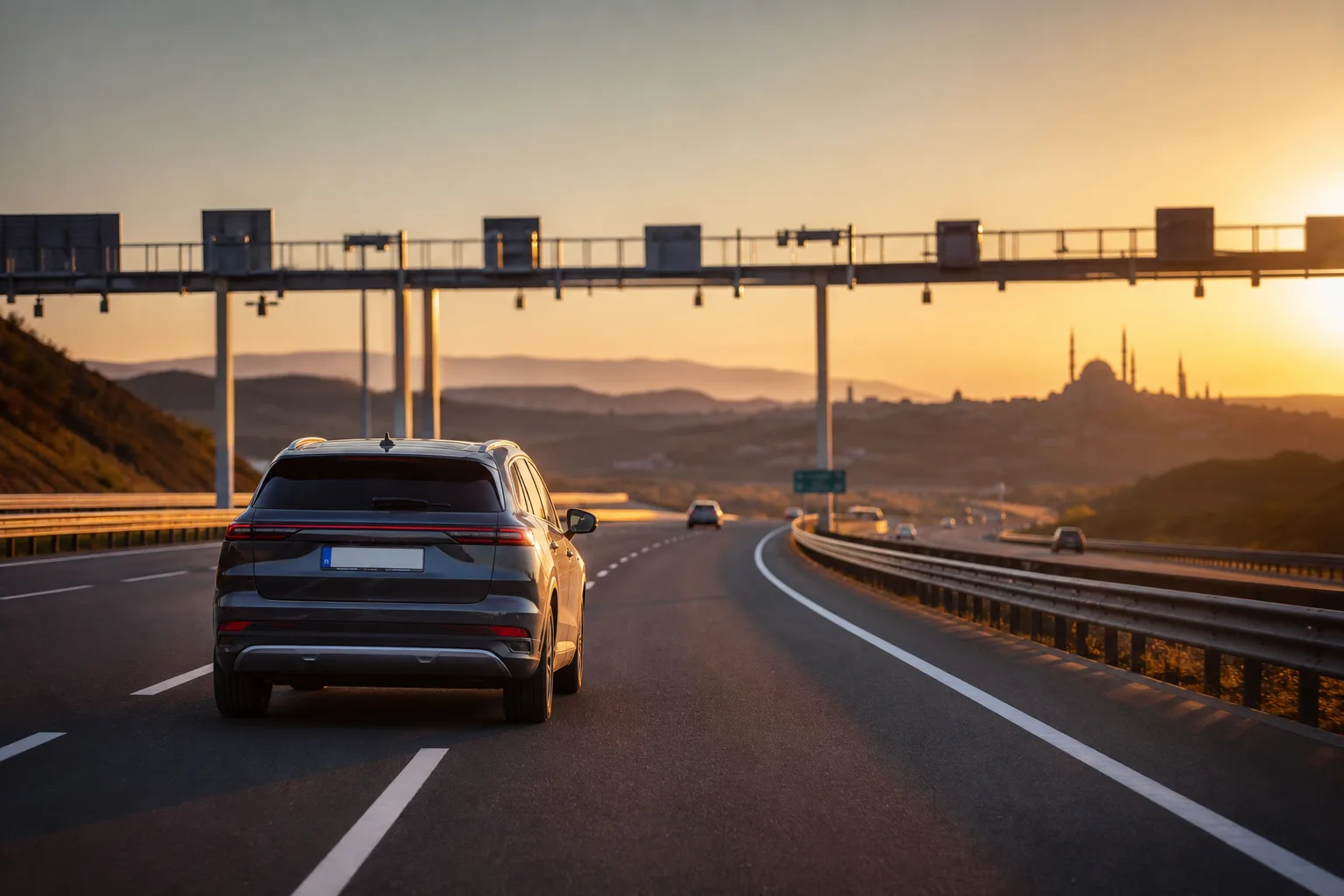
Picture the moment it goes wrong instead: you cross from Bulgaria at Kapıkule, join the O-3 motorway toward Istanbul, and a gantry silently photographs your plate. There was no toll booth to stop at, so nothing seems to have happened. Six weeks later the toll debt and a penalty are sitting in the system, and since 2026, unpaid amounts on a foreign-plated car can block it from leaving the country.
None of that happens to a prepared driver. This guide covers the documents to sort before the border, how HGS actually works for foreign plates, the speed limits and the cameras that enforce them, the 2026 fine system, and the local quirks worth knowing, each figure tied to the official Turkish source.
Key Takeaways
- Tourists can drive in Turkey on their home licence for up to 6 months per entry (Turkish ministry of foreign affairs rule); an IDP is not legally required but is worth carrying if your licence isn’t in the Latin alphabet.
- Turkish motorways and the big bridges use HGS, a plate-scanning prepaid toll system with no cash booths. Foreign plates need an HGS account too, and there’s a 15-day window to fund a passage before it becomes a fine.
- EU/UK motor insurance does not cover Turkey by default: you need a Green Card with the TR box valid, or local cover.
- Speed limits for cars: 50 km/h in towns, 90 on two-way roads, 110 on divided roads, 130 on motorways, and 140 only on a handful of private ones (KGM).
- Since 27 February 2026, fines are tiered by exact km/h over the limit, the old 10% radar tolerance is gone, and customs can hold a foreign-plated car at exit until unpaid fines and tolls are cleared.
The Documents to Sort Before the Border
Turkey’s paperwork for visiting drivers is short, but every item on it matters at the border or at a police check:
- Your driving licence. Non-Turkish tourists can drive on their home licence for up to 6 months per entry, and the clock resets each time you enter, per the Turkish foreign ministry. The full detail, including the different rule for residents, is in our guide to driving in Turkey on a foreign licence.
- An International Driving Permit, situationally. An IDP is not a legal requirement for most visitors, but police and rental desks read Latin-alphabet licences far more easily, so drivers with non-Latin licences should carry one.
- Vehicle registration, and authorisation if the car isn’t yours. If the car is registered to another person or a company, carry written authorisation from the owner (notarised is the safe version) – border officials can ask how you come to have the vehicle.
- A Green Card with Turkey covered. Turkey sits outside the EU motor-insurance zone, so a standard EU or UK policy stops at the border unless the insurer has validated the TR box on a Green Card. Border checks do ask for it.
That’s the whole list for a private car. No carnet, no special vehicle permit for a normal tourist visit.
Tolls in Turkey: How HGS Works on a Foreign Plate
HGS (Hızlı Geçiş Sistemi) is Turkey’s electronic toll system, and it is the single biggest surprise for first-time visitors. There are no cash booths on the motorway network. Gantries read your number plate at motorway speed and deduct the toll from a prepaid balance linked to your plate.
Three mechanics matter for a foreign driver:
- Registration is per plate, in advance. The passage itself takes seconds; having a funded account attached to your plate is the part you must arrange.
- There’s a 15-day grace window. After an unfunded passage, you have 15 days to top up and cover it before it converts into a penalty (KGM’s foreign-plate rules).
- The official route is built for residents. PTT, the state HGS retailer, effectively requires an in-person branch visit, and its systems lean on a Turkish ID number that visitors don’t have. Sorting HGS for a foreign-plated vehicle before you cross saves the branch hunt on day one.
The 2026 addition gives this real teeth: customs now checks for unpaid traffic fines and HGS tolls before clearing a foreign-plated vehicle to leave Turkey. An ignored toll doesn’t disappear when you drive home anymore. It waits for you at the exit gate.
Turkey’s Speed Limits and the Cameras That Enforce Them
Turkey’s speed limits for cars are consistent nationwide, published by KGM, the national highways directorate:
| Road type | Car limit |
|---|---|
| Towns and built-up areas | 50 km/h |
| Two-way rural roads | 90 km/h |
| Divided roads (bölünmüş yol) | 110 km/h |
| Motorways (otoyol) | 130 km/h |
| Private-operator motorways (Osmangazi, Yavuz Sultan Selim, Northern Marmara routes) | 140 km/h |
The 140 tier is the trap in that table: it applies only on a handful of privately operated motorways and bridges. Every state motorway stays at 130. The full breakdown by vehicle type, including vans, motorhomes, and trailers, is in our Turkey speed limits guide.
Enforcement is layered and mostly automated: TEDES fixed cameras (signed “Radar Hız Kontrolü”), MOBESE urban camera networks, unmarked EDS mobile units, and average-speed measurement between gantries.
Two details are easy to get wrong. Signs showing odd values like 82 or 94 km/h are leftovers from the pre-2026 tolerance era, and the printed number is now the enforced number. And radar-detector hardware is itself illegal in Turkey, with its own penalty under the traffic law.
Fines in 2026: A New, Stricter System
Law No. 7574, in force since 27 February 2026, rebuilt Turkish speeding fines into exact km/h tiers and abolished the old 10% radar tolerance. Inside towns, enforcement now starts at just 6 km/h over the limit. Fines climb through tiers (2,000 TL up to 30,000 TL as published in the Official Gazette), and the top tiers add licence suspensions of 30 to 90 days.
Two features of the system work in a visitor’s favour. Every tier carries a 25% statutory discount if you pay within 15 days. And payment channels for foreign drivers exist online, through the tax office’s interactive portal and KGM’s foreign-vehicle system, so clearing a fine doesn’t require a Turkish bank account.
The enforcement hook is the same one HGS uses: unpaid fines can hold your car at customs when you try to exit. The era of ignoring a Turkish fine from abroad ended in 2026. Pay in the discount window and move on.
Turkey’s Road Rules and the Quirks Worth Knowing
The formal rules feel familiar to any European driver: right-hand traffic, seat belts for everyone, and a drink-drive limit of 0.50 promille for private cars. Cross that limit and the traffic law (Article 48) brings a fine, the vehicle pulled from traffic, and a six-month licence confiscation. Treat it as a reason to keep driving and drinking fully separate.
The quirks are where local experience helps:
- Rural two-way roads are where fines actually happen. The 90 km/h limit drops constantly for junctions, villages, and roadworks, and it rarely “resumes” with a clear sign. When in doubt, stay at the lower number.
- City driving is assertive, not aggressive. In Istanbul and Ankara, dolmuş minibuses stop without much warning and lane discipline is fluid. Leave more following distance than at home and let the flow carry you.
- Fuel and rest stops are excellent on motorways. The otoyol network has frequent, modern service areas, and distances between them are signed well in advance.
- Petrol stations often have attendants. Pull up, state the fuel and amount, and pay at the pump or kiosk. Tipping isn’t expected.
The Drives Worth Planning Around
Turkey rewards drivers more than almost anywhere else in Europe, because the distances hide genuinely spectacular routes. The classic first trip is Istanbul to Cappadocia by car, around 730 km of fast motorway and open Anatolian plateau. The D400 coastal road between Antalya and Fethiye earns its reputation, hairpins and sea views included.
Coming from Europe, the land entries via Bulgaria (Kapıkule, the busiest) and Greece (İpsala) put you straight onto the western motorway network. Overlanders arriving from Georgia join the Black Sea coast road at Sarp. Whichever gate you use, the HGS and Green Card homework above applies from the first kilometre.
If Something Goes Wrong
Turkey runs a single national emergency number: 112, unified across all 81 provinces for police, ambulance, fire, and gendarmerie, with call-takers able to handle foreign languages. Save it before the trip and it covers every roadside emergency.
For a breakdown on a motorway, pull onto the hard shoulder, set the warning triangle, and call your insurer’s assistance line or 112 if the situation is dangerous. Motorway operators patrol the otoyol network regularly, so help tends to arrive faster there than on rural roads.
The Short Version
Driving in Turkey comes down to preparation, not bravery. Your licence already works for a tourist trip, the roads are better than their reputation, and the rules read like the rest of Europe with a stricter 2026 enforcement layer. Sort three things before the border: an HGS account for your plate, a Green Card that covers TR, and a habit of respecting posted limits exactly, because the tolerance era is over. Do that, and the country opens up into one of Europe’s great road-trip destinations. For rule-by-rule detail country-wide, our driving guides cover Turkey and its neighbours spoke by spoke.
Frequently Asked Questions
Can I drive in Turkey with a UK or EU licence?
Yes. Non-Turkish tourists can drive on their home licence for up to 6 months per entry, and the period resets each time you enter the country. Residents follow different rules and eventually need a Turkish licence.
Do I need an International Driving Permit for Turkey?
Not legally, for most visitors. An IDP becomes genuinely useful when your licence isn’t in the Latin alphabet, and some rental companies ask for one regardless. It’s cheap insurance against a roadside misunderstanding.
How do tolls work for foreign cars in Turkey?
Through HGS: gantries scan your plate and charge a prepaid balance registered to it. There are no cash booths on motorways. You have 15 days after a passage to fund it before it becomes a fine, and unpaid tolls can block the car’s exit at customs.
Is my EU or UK car insurance valid in Turkey?
Not by default. Turkey is outside the EU motor-insurance zone, so you need a Green Card with the TR box validated by your insurer, or local border insurance. Checks at the border do ask for proof.
What are the speed limits in Turkey?
For cars: 50 km/h in towns, 90 on two-way rural roads, 110 on divided roads, 130 on motorways, and 140 only on a few privately operated motorways and bridges. Lower limits apply to vans, buses, and cars towing trailers.
How strict are Turkish speed cameras?
Since February 2026, very. The 10% radar tolerance was abolished, town enforcement starts at 6 km/h over, and cameras include fixed TEDES units, mobile vans, and average-speed sections. The number on the sign is the number enforced.
What happens if I leave Turkey with unpaid fines?
Since 2026, you may not be able to. Customs checks foreign-plated vehicles for unpaid traffic fines and HGS tolls at exit and can hold the car until they’re cleared. Paying within 15 days also earns a 25% statutory discount.
Can I rent a car in Turkey with a foreign licence?
Yes. Renting a car in Turkey works on the same licence rules as driving your own: a foreign licence within its 6-month window is accepted, and some rental companies additionally ask for an IDP, especially with non-Latin-alphabet licences. Confirm the desk’s requirements when you book.
Which side of the road does Turkey drive on?
The right, like continental Europe. Overtaking is on the left, and motorway discipline is close to what EU drivers expect, with somewhat livelier city traffic.
What is the emergency number in Turkey?
112, for everything: police, ambulance, fire, and gendarmerie. It works nationwide in all 81 provinces and the call centres can handle foreign languages.
Sources
- KGM: speed limits by vehicle and road type (kgm.gov.tr)
- KGM: rules for foreign-plated vehicles, HGS and exit checks (kgm.gov.tr)
- Official Gazette: Law No. 7574 fine tariff, 27 Feb 2026 (resmigazete.gov.tr)
- EGM: traffic safety law announcement (egm.gov.tr)
- EGM: alcohol and driving, Article 48 rules (egm.gov.tr)
- Turkish MFA: foreign licence validity rules (mfa.gov.tr)
- Road Traffic Law No. 2918, radar devices and Article 48 (mevzuat.gov.tr)
- 112: Turkey’s single national emergency number (112.gov.tr)
Ramis Kalkan
Ramis Kalkan leads growth at Vignetim. He writes about everything that makes European road trips smoother, from digital vignettes to eSIMs. Based in Ankara, usually mid-way through planning his next drive.