Countries That Drive on the Left: The Full List
Four European countries drive on the left, and so does a third of the world. The full country-by-country list, plus what changes for you the moment you cross between the two systems.
 Ramis Kalkan
Updated: 7 min read
Around 75 countries and territories drive on the left, home to roughly a third of the world’s population. In Europe there are just four: the United Kingdom, Ireland, Malta, and Cyprus. Everywhere else on the continent, traffic keeps right.
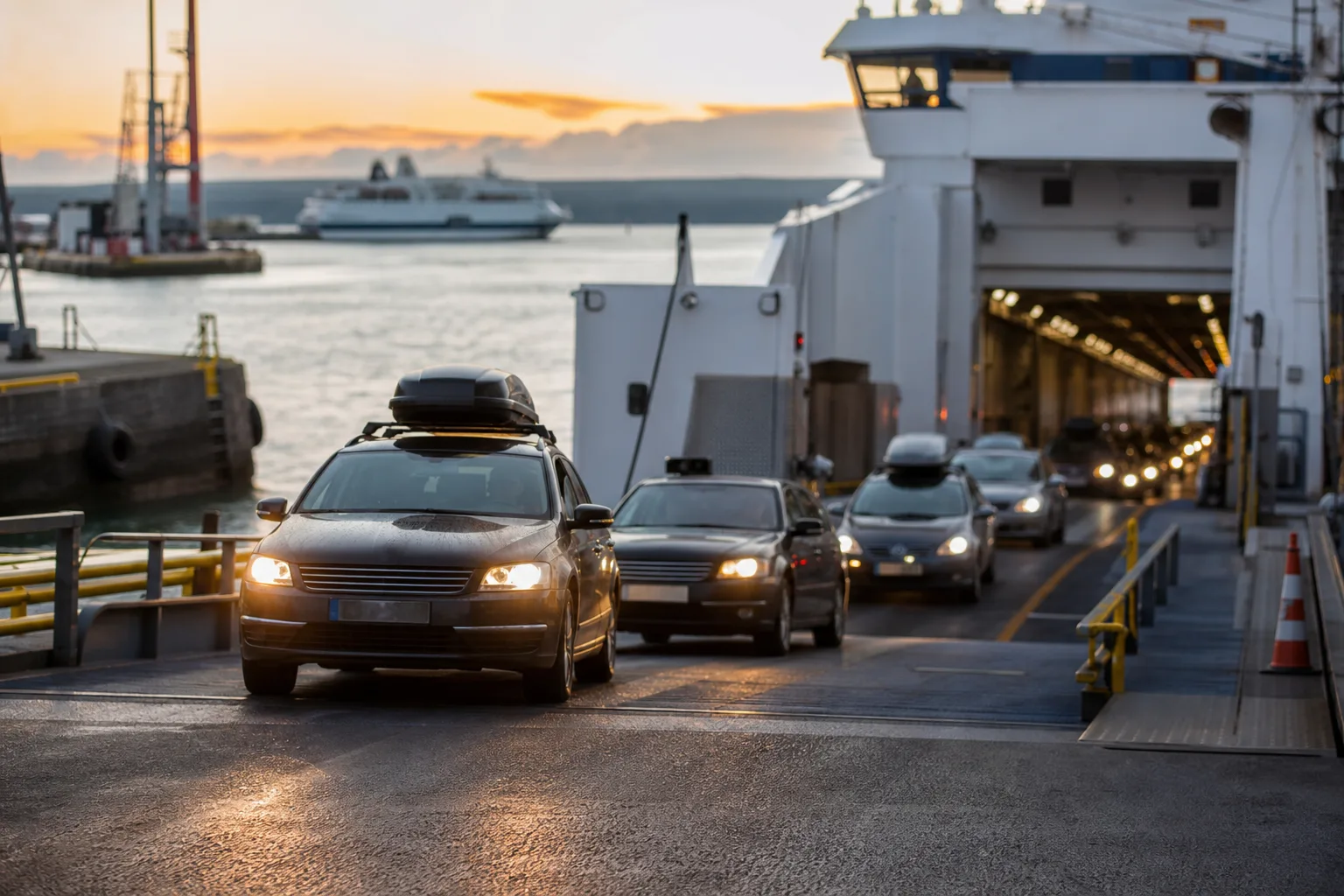
That single fact shapes more road trips than any toll or speed limit. Rent a car in Dublin after years of right-hand traffic, or roll off the ferry in Calais with a UK car, and every roundabout, junction, and overtake works against your instincts for a day or two.
This guide lists the countries that drive on the left, region by region, then flips the map to show the right-hand-traffic world. You’ll also find what the split means in practice for a European trip, and quick answers for the countries people ask about most.
Key Takeaways
- Around 75 countries and territories drive on the left, roughly a third of the world by population (WHO road-safety data).
- Only four European countries drive on the left: the UK, Ireland, Malta, and Cyprus.
- About two-thirds of the world’s countries drive on the right, including all of mainland Europe.
- Most left-driving countries are former British territories, but not all: Japan, Thailand, and Indonesia drive left too.
- Sweden made its famous overnight switch to the right in 1967, Iceland followed in 1968, and Samoa went the other way in 2009.
Which Countries Drive on the Left?
The left-driving world clusters around the former British Empire, with a few notable exceptions like Japan and Thailand. Here’s the full picture, grouped by region.
One note on terms before the list. Left-hand-traffic countries like the UK use right-hand-drive cars, so lists of “left hand drive countries” sometimes describe the steering wheel rather than the road. The tables below are about the road, not the wheel.
Europe
| Country | Notes |
|---|---|
| United Kingdom | Signs and limits in mph |
| Ireland | Signs in km/h since 2005 |
| Malta | Smallest EU member driving left |
| Cyprus | Left in both the Republic and the north |
The Isle of Man, Jersey, and Guernsey also drive on the left. Every other European country, from Portugal to Finland, drives on the right.
Asia
| Countries | Worth knowing |
|---|---|
| Japan | Never a British colony, left by its own tradition |
| India, Pakistan, Bangladesh, Nepal, Bhutan, Sri Lanka, Maldives | The subcontinent and Indian Ocean block |
| Thailand | Never colonised, drives left anyway |
| Malaysia, Singapore, Brunei, Indonesia, Timor-Leste | Southeast Asian left-driving belt |
| Hong Kong, Macau | Left, unlike mainland China next door |
Africa
| Countries | Worth knowing |
|---|---|
| South Africa, Namibia, Botswana, Zimbabwe, Zambia | The southern block |
| Malawi, Mozambique, Tanzania, Kenya, Uganda | The eastern block |
| Lesotho, Eswatini | Enclosed by left-driving neighbours |
| Mauritius, Seychelles | Indian Ocean islands |
Southern and eastern Africa together form the largest connected left-driving block outside Asia.
Oceania
| Countries | Worth knowing |
|---|---|
| Australia, New Zealand | The anchors of the region |
| Fiji, Papua New Guinea, Solomon Islands | Pacific left-drivers |
| Tonga, Tuvalu, Kiribati, Nauru | Island micro-states |
| Samoa | Switched right to left in 2009 for cheaper used cars from Japan and Australasia |
The Caribbean and the Americas
| Countries | Worth knowing |
|---|---|
| Jamaica, Barbados, Trinidad and Tobago, Bahamas | The larger islands |
| Antigua and Barbuda, Dominica, Grenada, Saint Lucia, Saint Vincent and the Grenadines, Saint Kitts and Nevis | The eastern Caribbean chain |
| Guyana, Suriname | The only left-driving countries on the American mainland |
Which Countries Drive on the Right?
The list of countries that drive on the right is far longer: all of mainland Europe, the United States, Canada, China, Russia, Brazil, and nearly all of the Middle East, North Africa, and Latin America. About two-thirds of the world’s countries keep right, and they hold roughly two-thirds of its people and road traffic.
So right wins comfortably, by both country count and population. Left-hand traffic survives as the strong minority system, concentrated in islands and former British territories where switching would cost more than it would ever save.
The two systems meet at surprisingly few land borders. Most left-driving countries are islands, so the changeover usually happens on a ferry or at an airport car-rental desk rather than at a painted line on the road. Where the systems do meet on land, such as between Thailand and its neighbours, purpose-built crossover junctions swap the traffic streams.
Why Is the World Split at All?
The short version: left was the historical norm for riders and carriages, and much of the world later flipped right under French and American influence. Britain kept its habit, wrote it into law in 1835, and exported it across the empire, which is why the left-driving map looks the way it does.
Sweden made the most famous switch, moving to the right on 3 September 1967, a day the country still calls Dagen H, and Iceland followed a year later. The full story, from medieval riders to Napoleon to why Japan sided with the left, is in our guide to why the UK drives on the left.
What the Split Means for Your European Trip
For most drivers the question is practical: you live in one system and your holiday is in the other. Two situations cover nearly everyone.
UK and Irish drivers heading to the continent
The moment you leave the ferry or the tunnel, everything mirrors. You drive on the right, overtake on the left, and give way to traffic from the left on roundabouts. The first junctions are the dangerous ones, especially rejoining a quiet road after a fuel stop, when muscle memory pulls you to the wrong side.
A right-hand-drive car adds two chores on the continent: your headlights need beam deflectors so they don’t dazzle oncoming traffic, and overtaking needs more patience because you sit on the kerb side. Motorway rules, vignettes, and tolls change at every border too, so check European vignettes and tolls for each country on your route before you set off.
Continental drivers visiting Ireland, Malta, or Cyprus
The same flip in reverse, usually in a hire car, which at least puts the steering wheel on the correct side for the country. Ireland deserves extra attention: it drives on the left but signs in km/h, a combination that exists almost nowhere else, and its rural roads are narrower than most of Europe is used to. Our guide to Ireland’s speed limits covers the numbers and the recent rural changes.
Malta and Cyprus are popular hire-car islands, and both inherited left-hand traffic from British rule. Give yourself a quiet first hour, take one roundabout at a time, and the system clicks faster than you expect. There are more route ideas in our road-trip guides.
The Short Version
Around 75 countries and territories drive on the left, and only four of them are in Europe: the UK, Ireland, Malta, and Cyprus. The rest of the continent, and about two-thirds of the world, drives on the right. The split is history, not engineering, and it survives because changing sides is expensive and dangerous enough that almost nobody does it anymore.
For your trip, the rule of thumb is simple. Crossing between the two systems is safest on day one if you plan your first junctions, keep a reminder on the dashboard, and let roundabouts set your rhythm. Sort the paperwork side of the border, from stickers to tolls, before you travel, and the side of the road becomes the only new thing your brain has to manage.
Frequently Asked Questions
How many countries drive on the left? Around 75 countries and territories drive on the left, home to roughly a third of the world’s population. Counts vary slightly depending on whether overseas territories and dependencies are listed separately from their parent countries.
Which European countries drive on the left? Four: the United Kingdom, Ireland, Malta, and Cyprus. The Isle of Man and the Channel Islands also drive on the left. All of mainland Europe drives on the right.
What side of the road does Ireland drive on? Ireland drives on the left, like the UK. Unlike the UK, Irish speed-limit signs use km/h rather than mph, so a hire car from Belfast to Dublin crosses a unit change without changing sides.
What side of the road does Australia drive on? Australia drives on the left, as do New Zealand and most of the Pacific islands. If you learned to drive in mainland Europe or North America, an Australian hire car flips everything, starting with the driver’s seat.
What side of the road do they drive on in Malta and Cyprus? Both drive on the left, a legacy of British administration. They’re two of only four European countries that do, which is worth remembering when you pick up a hire car at the airport.
Does Japan drive on the left? Yes. Japan is the largest left-driving country that was never part of the British Empire. Its keep-left custom predates cars and was formalised in the early 1900s.
Sources
Ramis Kalkan
Ramis Kalkan leads growth at Vignetim. He writes about everything that makes European road trips smoother, from digital vignettes to eSIMs. Based in Ankara, usually mid-way through planning his next drive.