Speed Limits in Iceland: Paved Roads, Gravel, and the Ring Road
Iceland’s speed limit drops from 90 on paved roads to 80 on gravel, and much of the country is gravel. Here are the Ring Road rules, the single-lane bridges, and the tolls to sort before you drive.
 Ramis Kalkan
Updated: 6 min read
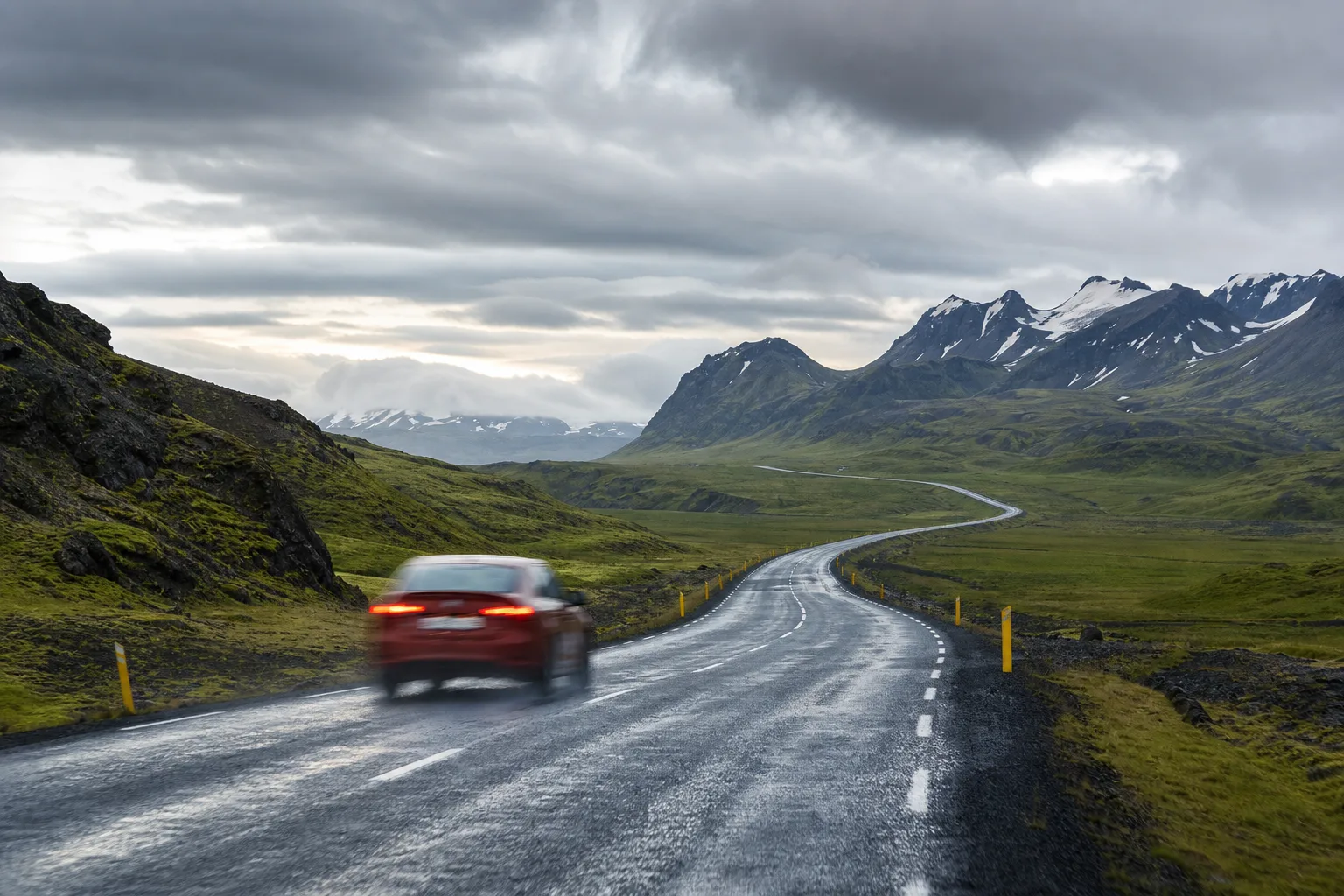
In Iceland the speed limit is 90 km/h on paved rural roads, 80 km/h on gravel, and 50 km/h in towns. That gravel drop is the one that catches every visitor, because much of Iceland outside the Ring Road is unpaved, and the limit falls the moment the tarmac ends.
Here’s why it matters so much. Most trouble on Icelandic roads isn’t a speed-camera fine, it’s a single-vehicle rollover where a rental car hits gravel too fast and slides. Get the road-type limits right, respect the single-lane bridges and blind summits, and Iceland is one of the great drives in the world.
This guide covers the speed limit in Iceland by road type, the gravel and highland rules, the near-zero alcohol limit, and the tunnel tolls to sort before you set off. Every figure is tied to an official Icelandic source.
Key Takeaways
- Icelandic limits are 90 km/h on paved rural roads, 80 on gravel, and 50 in towns (Icelandic Road Administration).
- The limit drops to 80 the moment a road turns to gravel, and much of rural Iceland is gravel.
- Single-lane bridges and blind summits are common, even on the Ring Road. Slow to 50 and be ready to give way.
- The blood alcohol limit is 0.2, so one drink puts you over. Off-road driving is illegal and heavily fined.
- Iceland charges tunnel and road tolls, not a vignette, and they’re barrier-free, so you pay online.
What Are the Speed Limits in Iceland?
Iceland sets its limits by road surface, not just road type, which is unusual and easy to miss. These come from the Icelandic Road Administration (Vegagerðin) and apply to a standard car.
| Road type | Speed limit |
|---|---|
| Town / urban area | 50 km/h |
| Rural paved road | 90 km/h |
| Rural gravel road | 80 km/h |
| Single-lane bridge | 50 km/h |
The surface is the key. A road can be 90 km/h while paved and 80 the instant it turns to gravel, with no change of route, so watch the road ahead as much as the signs. Lower signed limits also appear near settlements and hazards, and they override these defaults.
The Gravel, the Bridges, and the Blind Summits
Iceland’s real driving challenge isn’t top speed, it’s the transitions. Three things trip up visitors more than any radar:
- Paved to gravel. When tarmac becomes gravel the limit drops to 80, and so should you, because grip vanishes and the edges are soft. Braking and steering both take longer.
- Single-lane bridges (einbreið brú). Common even on the Ring Road, these carry one lane for both directions. The car that reaches the bridge first has priority, so slow to 50 and be ready to stop.
- Blind summits (blindhæð). On a crest you can’t see oncoming traffic, so keep right and ease off. Many rural roads have them.
Treat all three as reasons to slow down early rather than react late, and most of the risk disappears.
Highland F-Roads and the Off-Road Ban
Beyond the Ring Road lie the F-roads, the highland mountain routes, and they play by different rules. They open only in summer once cleared, they require a 4×4, and many involve unbridged river crossings you attempt at your own risk. A normal hire car is not allowed on them, and rental insurance won’t cover the damage.
One rule applies everywhere, not just the highlands: off-road driving is illegal in Iceland and heavily fined. The volcanic terrain and moss take decades to recover, so you must stay on marked tracks at all times, however tempting the open landscape looks.
Speeding Fines and the Alcohol Limit
Iceland fines speeding by how far over the limit you are, and the amounts are high by international standards, so a casual overspeed on an empty road can still be expensive. Because the figures are set locally and change, check the current amount rather than an old guide.
The alcohol rule is one of the strictest in Europe. The blood alcohol limit is 0.2, which in practice means a single drink can put you over, so the safe approach is none at all before driving. Headlights are also required on at all times, day and night, year-round.
Iceland’s Tolls: Barrier-Free, Paid Online
Iceland has no motorway vignette. What it does have is a small but growing set of tunnel and road tolls, and they work differently from a booth. They’re barrier-free, so a camera reads your plate as you pass and you pay online, usually within a set deadline, or you face a penalty.
That catches visitors who expect to stop and pay at a gate. If your route uses a tolled tunnel, sort the Iceland tunnel tolls so a missed online payment doesn’t turn into a fine after you’ve flown home. It’s a toll, not a sticker, which is why Iceland has no vignette at all, a difference we explain in why some countries have no vignette. If your wider trip also takes in mainland Europe, our European vignette guide shows where a sticker is needed.
The Short Version
The speed limit in Iceland is 90 km/h on paved rural roads, 80 on gravel, and 50 in towns and on single-lane bridges. The gravel drop is the one to remember, because much of the country is unpaved and that’s where most rental-car accidents happen. Slow early for bridges and blind summits, and keep off the highland F-roads unless you’re in a 4×4.
Keep to 0.2 for alcohol, which really means none, never drive off-road, and pay any barrier-free tunnel toll online before the deadline. Get those right and Iceland’s Ring Road is as rewarding a drive as any in Europe.
Frequently Asked Questions
What is the speed limit on the Iceland Ring Road? Most of the Ring Road (Route 1) is paved, so the limit is 90 km/h, dropping to 80 where it turns to gravel and 50 through towns. Single-lane bridges on the route are 50 km/h. Lower signed limits near hazards override these.
Why does the speed limit drop on gravel in Iceland? Gravel offers far less grip than tarmac, so the limit falls from 90 to 80 km/h the moment a road becomes unpaved. Much of rural Iceland is gravel, and going too fast on it is the most common cause of rental-car accidents.
What is the drink-drive limit in Iceland? Iceland’s blood alcohol limit is 0.2, one of the strictest in Europe. A single drink can put you over, so the safe approach is no alcohol at all before driving.
Can I drive a normal car on Iceland’s F-roads? No. The highland F-roads require a 4×4, open only in summer, and often include unbridged river crossings. A standard hire car isn’t allowed on them, and rental insurance won’t cover the damage.
Do I need to pay tolls to drive in Iceland? Only on certain tunnels and new road sections, and there’s no vignette. The tolls are barrier-free, so a camera reads your plate and you pay online within a deadline. Miss it and you can be penalised after you leave.
Is off-road driving allowed in Iceland? No. Off-road driving is illegal everywhere in Iceland and heavily fined, because the terrain takes decades to recover. You must stay on marked roads and tracks at all times.
Sources
Ramis Kalkan
Ramis Kalkan leads growth at Vignetim. He writes about everything that makes European road trips smoother, from digital vignettes to eSIMs. Based in Ankara, usually mid-way through planning his next drive.