eSIM vs Physical SIM: Which Should You Use?
One downloads in minutes, the other survives a phone swap. The honest comparison travellers need, plus the dual-SIM setup that takes the best of both.
 Ramis Kalkan
Updated: 7 min read
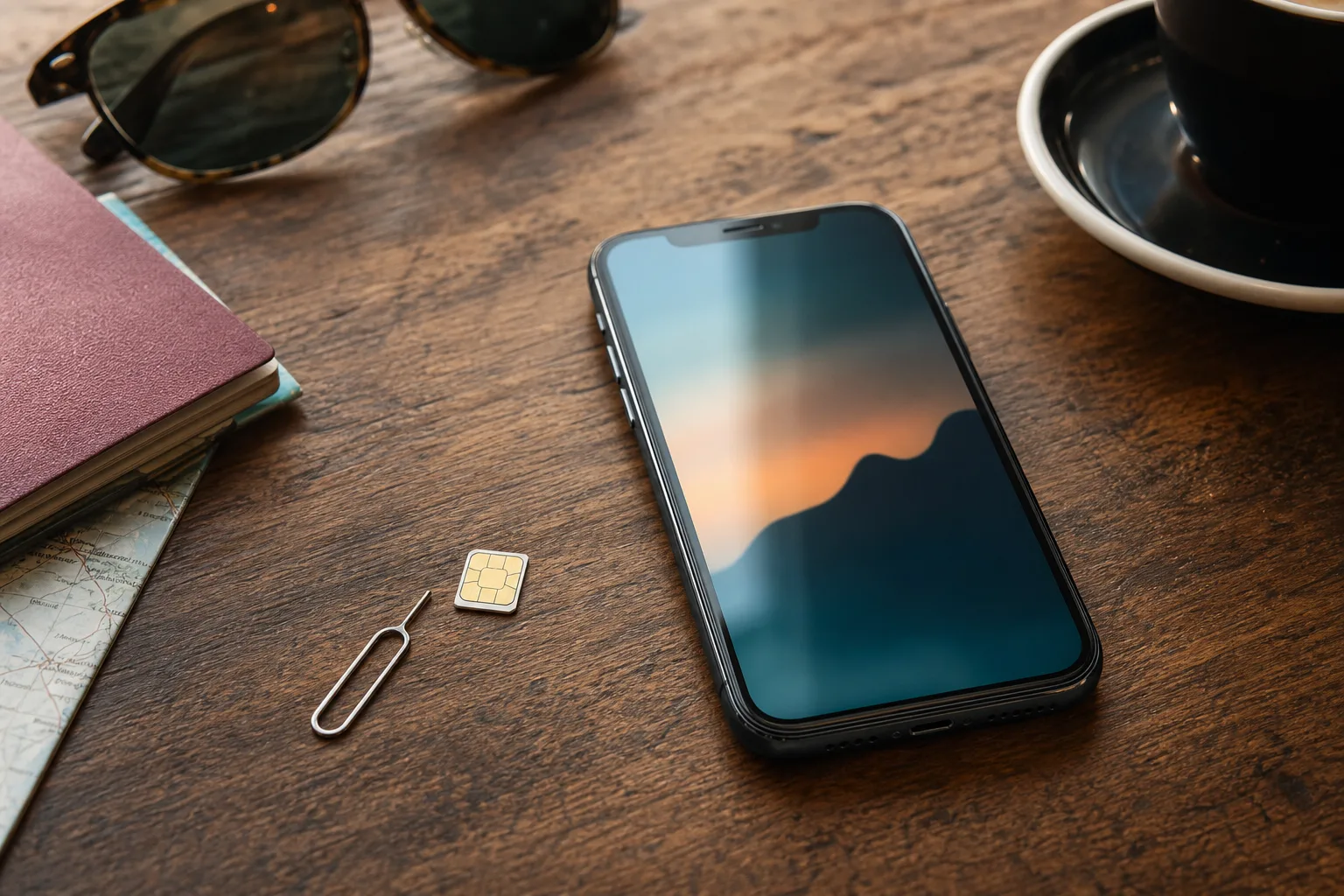
For travel, the eSIM wins: it downloads in minutes, works alongside your home SIM, and lets you set up a destination plan before you fly. The physical SIM still wins in two situations, older or carrier-locked phones and quick device swaps, because a plastic card moves between handsets in seconds while an eSIM has to be transferred or re-issued. Most travellers get the best result using both at once.
That’s the verdict up front. The rest of this guide earns it, because the differences between the two formats are practical, not technical trivia, and the right choice genuinely depends on your phone, your trip, and how often you change devices.
Key Takeaways
- An eSIM is delivered digitally and installs in minutes; a physical SIM has to be posted, collected, or bought at a counter.
- A physical SIM moves to another phone in seconds. An eSIM transfer goes through your provider or a guided setup flow, which is the format’s one real weakness.
- For travel, the dual-SIM setup beats choosing: home number stays on the physical SIM, holiday data runs on a travel eSIM.
- eSIM support starts with phone generations from around 2018; older or carrier-locked handsets may force the physical-card route.
- Neither format is faster on the network: speed, coverage, and battery use are set by the plan and the phone, not the SIM type.
The Real Differences at a Glance
Both formats do the same job: they identify your phone to a network. Everything that matters sits in how they get into your phone and out of it again.
| eSIM | Physical SIM | |
|---|---|---|
| Getting it | QR code or app, delivered in minutes | Shop counter, post, or vending machine |
| Setup | Download over Wi-Fi, enable in settings | Insert card, works immediately |
| Switching networks | Add a new profile, no hardware | Swap cards, keep track of the old one |
| Changing phones | Transfer or re-issue via provider | Move the card across in seconds |
| If your phone dies | Profile re-issued to the replacement | Card goes straight into any spare phone |
| Old or locked phones | Needs an eSIM-capable, unlocked phone | Works in practically everything |
| Losing it | Nothing to lose or damage | Cards get lost, bent, and mis-sized |
| Travel use | Plans installed before departure, several stored at once | One slot, one plan at a time |
Network performance isn’t in that table for a reason: there’s no difference. Signal, speed, and battery consumption depend on the phone and the network, not on whether the plan arrived as plastic or as a download.
Where the eSIM Wins
For anything travel-shaped, the eSIM’s advantages stack up fast:
- It arrives before you do. You buy a destination or regional plan at home, install it on Wi-Fi, and land with data already set up. No airport kiosk, no hunting a phone shop in a language you don’t speak.
- It coexists with your home SIM. The dual-SIM arrangement, home number for calls and texts, eSIM for data, means you stop paying roaming rates without going dark on your real number. The mechanics of profiles and switching are covered in our guide to how an eSIM works.
- Several plans, one phone. A stored profile per region, switched in settings, replaces the little plastic bag of old SIM cards frequent travellers accumulate.
- Nothing physical to lose. No ejector pin, no adapter trays, no card left in a hotel drawer.
Where the Physical SIM Still Wins
An honest comparison has a second column, and it matters more than eSIM marketing admits:
- Device swaps are instant. Card out, card in, done. If you break a phone mid-trip and borrow a spare, the physical SIM is working before the eSIM support chat has answered. An eSIM must be transferred through a setup flow or re-issued by the provider.
- Old and locked phones. eSIM support became mainstream with the 2018 phone generation. A carrier-locked handset also stays locked to its provider regardless of format. If your phone fails either test, the choice is made for you.
- Shared and backup phones. A physical card rotates freely between devices, which suits a glovebox phone or a cheap backup handset.
Apple and Google both document their transfer flows, and they improve every year. But “improving” is not “instant”, and the plastic card’s portability remains the single genuine reason it survives.
The Traveller’s Answer: Use Both
The eSIM-or-physical framing hides the setup that actually works best on a trip: run both at once. Keep your home plan on the physical SIM so your number, and every banking text sent to it, stays live. Put the travel data plan on an eSIM. Pin mobile data to the eSIM line so the phone can’t quietly roam on the home plan.
That split costs nothing extra, takes one settings screen to arrange, and removes the roaming-bill risk without any of the switch-your-number friction. It’s the configuration most eSIM-capable phones were designed around.
eSIM or Physical SIM: Which One for Your Situation
- City break or holiday, phone from 2018 or later: travel eSIM for data, home SIM untouched. The default answer.
- Multi-country road trip: a regional travel eSIM covers every border on one profile, which is exactly what a drive across Europe needs.
- Long stay or relocation: a local physical SIM (or local eSIM) with a local number starts making sense once you need to be called locally for months.
- Older or locked phone: physical SIM abroad, or unlock the phone first. No decision to make.
- Frequent phone-swapper: keep the home line physical; use eSIMs for the travel layer you replace each trip anyway.
The Short Version
An eSIM versus physical SIM comparison lands differently depending on the question. For getting connected abroad quickly and cheaply, the eSIM wins and it isn’t close. For surviving a broken phone or serving a 2016 handset, the plastic card keeps its job. Most travellers shouldn’t choose at all: home number on the physical SIM, travel data on an eSIM, and both formats doing what each does best. Browse the travel eSIM options once your itinerary is set, and check the rest of our connectivity guides for the setup details.
Frequently Asked Questions
Is an eSIM better than a physical SIM?
For travel, yes: faster to get, installable before departure, and able to run alongside your home SIM. For device flexibility, no: a physical card still moves between phones far more easily. That’s why the dual-SIM combination beats either alone.
What are the disadvantages of an eSIM?
The honest list is short: transfers between phones go through the provider rather than your fingertips, very old or carrier-locked handsets don’t support it, and installation needs an internet connection. None of these affect a typical trip with a modern phone.
Do eSIMs drain the battery faster?
No. The SIM format doesn’t change power consumption. Running two active lines at once uses slightly more battery than one, but that’s true of dual-SIM in any format.
Can I use an eSIM and a physical SIM at the same time?
Yes, and it’s the recommended travel setup: the physical SIM keeps your home number reachable while the eSIM carries destination data. Nearly all eSIM-capable phones support this dual-SIM arrangement.
Is an eSIM more secure than a physical SIM?
Marginally, in one specific way: a thief can’t pull an eSIM out of a stolen phone to use or swap it, while a physical card can be removed in seconds. For everyday risks, both formats are equally safe.
Can I switch back to a physical SIM after using an eSIM?
Yes. Nothing about using an eSIM is permanent. Providers can issue your plan on plastic again, and both lines can coexist in the meantime.
Does an eSIM work on any phone?
No. You need an eSIM-capable handset, which broadly means the 2018 generation onward, and it must be unlocked if the plan comes from another provider. Check your model’s support list before buying a plan.
Which is better for a European road trip?
An eSIM, specifically a regional one. A single profile that covers every country on the route removes the border-by-border SIM hunt, and your home number stays live on the physical SIM the whole way.
Sources
Ramis Kalkan
Ramis Kalkan leads growth at Vignetim. He writes about everything that makes European road trips smoother, from digital vignettes to eSIMs. Based in Ankara, usually mid-way through planning his next drive.